

As technology continues to advance, many businesses still rely on legacy systems that are outdated and costly to maintain. These systems may have been essential in the past, but now they may be slowing down operations, increasing security risks, and driving up costs. In fact, 70% of organizations still depend on legacy systems that are not equipped to meet the demands of the modern business environment (Gartner). As a result, businesses that continue to rely on these systems risk falling behind their competitors who are adopting newer, more efficient technologies.
In light of these challenges, cloud computing offers a solution. It not only addresses the limitations of legacy systems but also offers a way to reduce operational risk and modernize business infrastructure. With the right legacy system modernization services, businesses can modernize step by step, reduce uncertainty, and keep core operations stable during the move. Cloud computing services can provide flexibility, scalability, and security that legacy systems simply can’t. In this article, we’ll explore how migrating to the cloud can reduce risk, improve efficiency, and set your business up for future success.
What is legacy system modernization?
Legacy system modernization refers to updating or replacing older systems built on outdated technology stacks. These systems often stay in place because they power essential business operations and reflect substantial prior investment. However, their aging architectures, software, or infrastructure can fall short of today’s expectations for performance, security, and seamless integration.
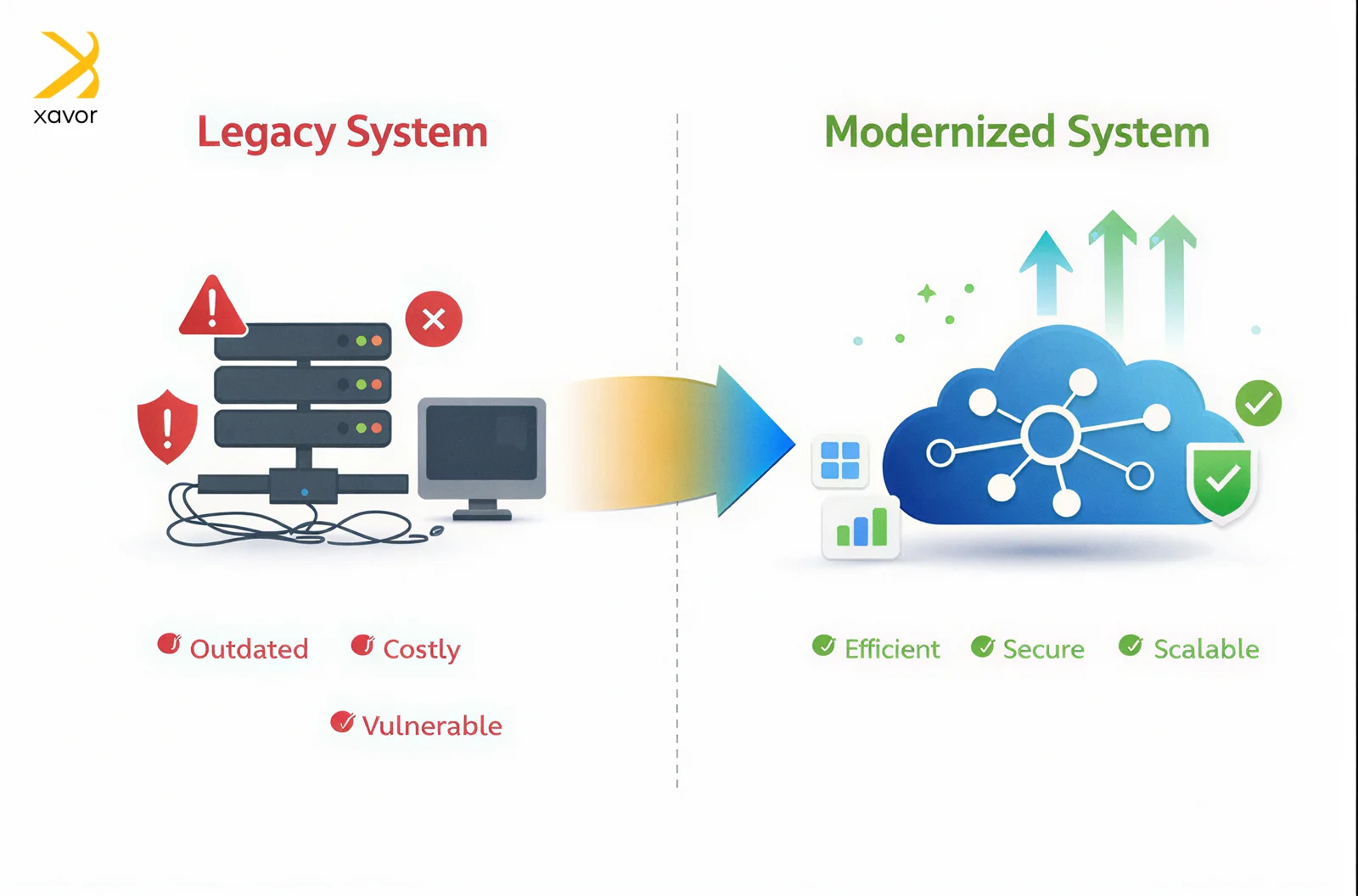
Common examples include long-standing mainframe applications, earlier generations of enterprise platforms, and older on-premises databases. Any system running on similarly outdated technologies is usually a strong candidate for legacy system modernization.
Practical legacy system modernization approaches
Most organizations don’t use a one-size-fits-all cloud modernization method. Instead, they blend multiple strategies depending on each system’s business value, technical health, and risk exposure. Some applications are migrated rapidly to modern environments, while others are modernized in phases over time.
For instance, a mission-critical transaction system might stay on its current platform, while customer-facing features and analytics are upgraded using cloud services. This hybrid cloud approach helps maintain stability where it matters most, while still unlocking new capabilities and innovation.
The challenge of legacy systems: Why it’s time to move on
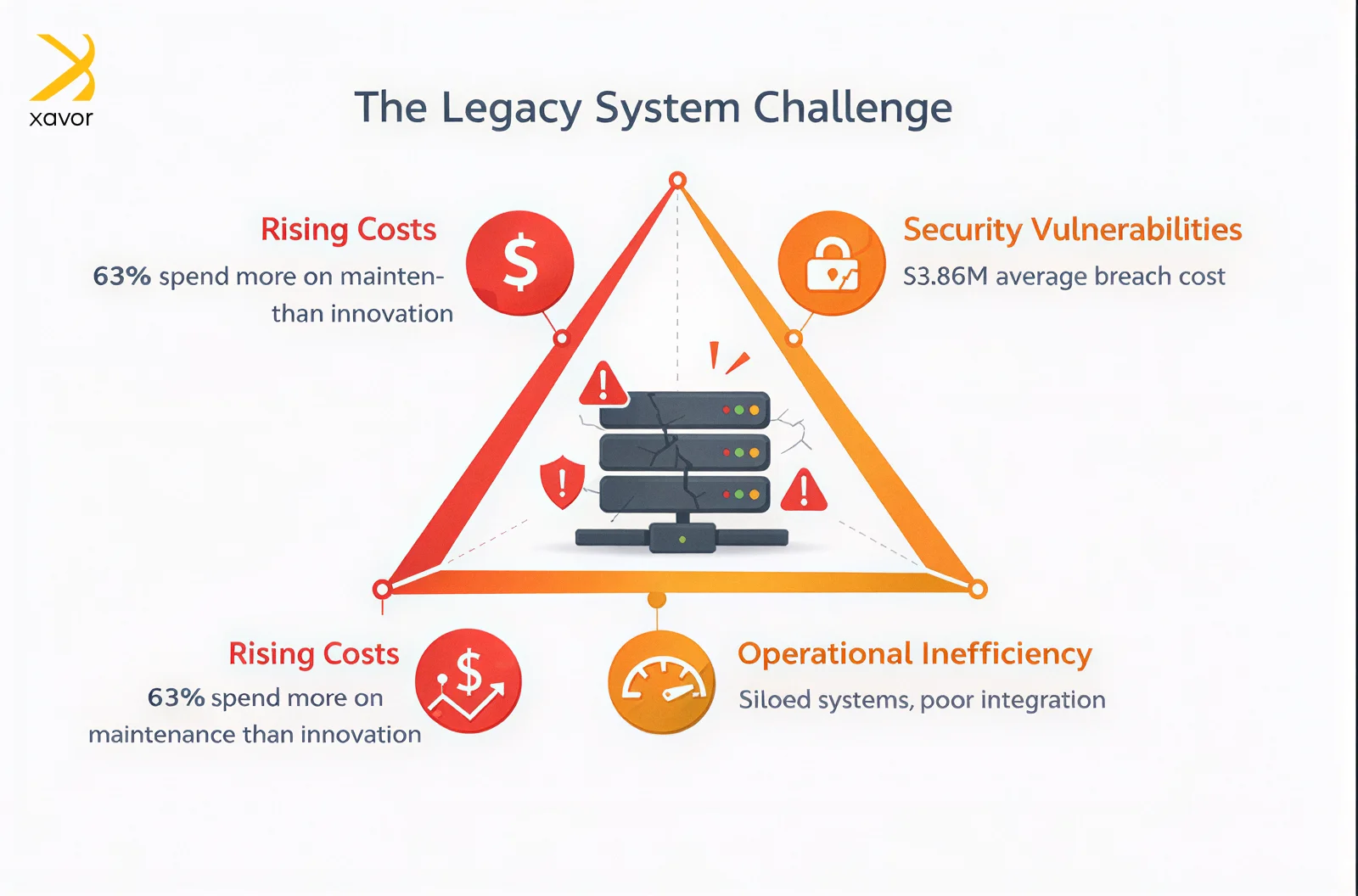
Legacy systems are like old vehicles, while they may still function; they are often inefficient, prone to breakdowns, and expensive to maintain. Businesses that continue to rely on these systems face several challenges:
Rising maintenance costs
As legacy systems age, they require more frequent repairs and specialized support. In many cases, businesses find themselves spending more money on keeping these systems running than on investing in innovative technologies. In 2020, 63% of organizations said they spent more on maintaining legacy systems than on developing new technology.
Security vulnerabilities
Older systems are often vulnerable to cyberattacks, as they may not receive timely security patches. Cybersecurity threats are more sophisticated today than ever before, and legacy systems are an easy target. This can result in data breaches, compliance violations, and significant financial losses. According to a report by IBM, the average cost of a data breach in 2020 was $3.86 million.
Operational inefficiency
Many legacy systems lack the flexibility to integrate with new technologies, making it harder for businesses to scale and adapt to changing market demands. As a result, businesses may find themselves operating in silos, unable to collaborate efficiently across departments or with external partners.
The cost of maintaining legacy systems
The data makes a strong case for why legacy system modernization can’t wait:
- Legacy platforms can absorb as much as 80% of IT budgets in maintenance alone, leaving far less funding for innovation.
- Postponing modernization leads to rapidly compounding technical debt, making future changes harder and more expensive.
- Legacy security gaps introduce serious, growing business risk.
- Aging systems often restrict integration with newer digital tools and services.
In today’s market, staying competitive requires the agility, scalability, and efficiency that modern cloud architectures are designed to deliver. Public cloud spending exceeded $631.9B in 2023 and is expected to rise to $1.806T by 2029, underscoring both the pace and the urgency of cloud adoption across industries.
How cloud computing addresses these challenges
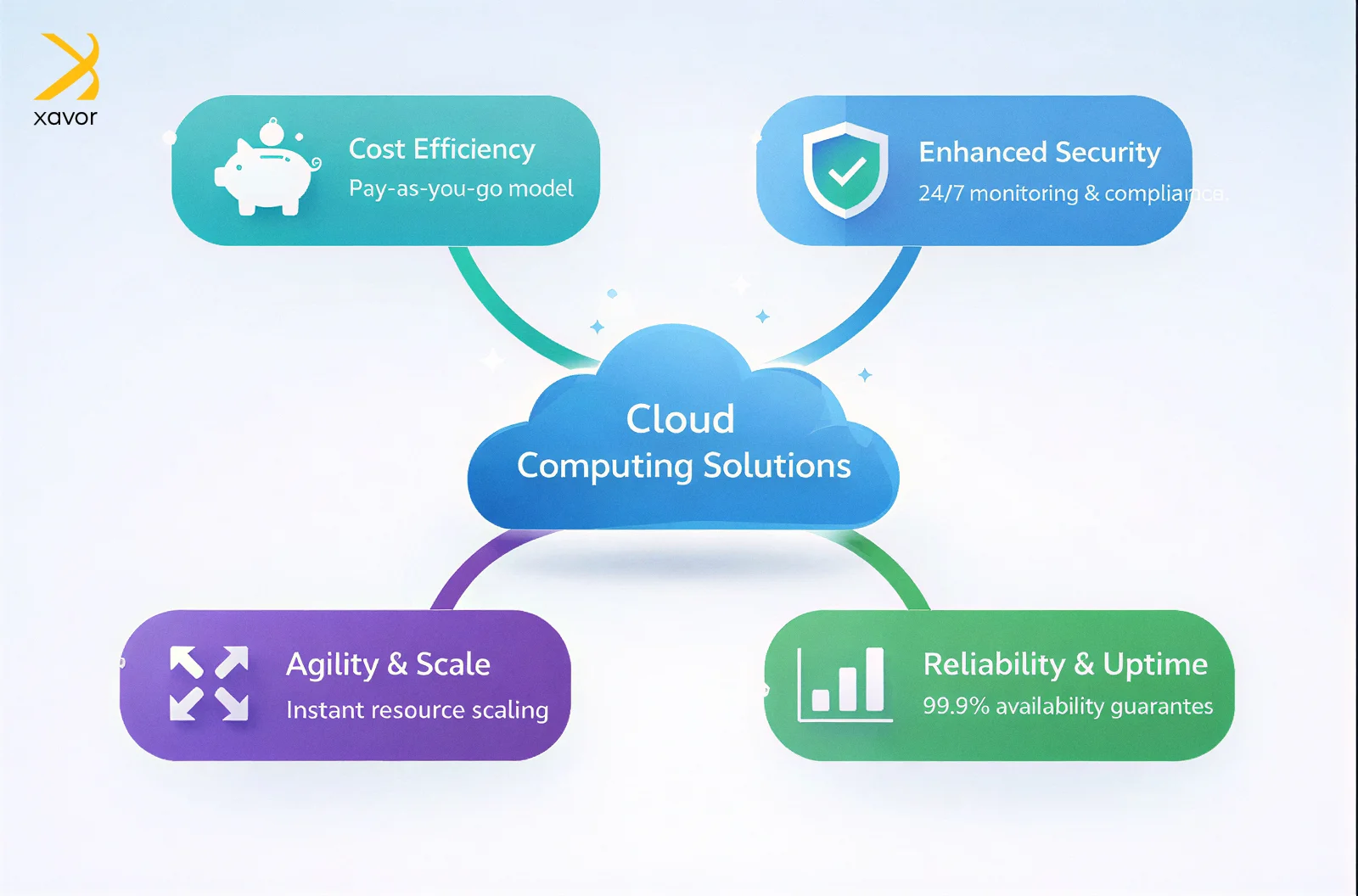
Cloud computing offers a way to modernize your technology infrastructure, reduce risk, and open up new possibilities for growth. Here’s how:
1. Cost savings and predictability
One of the most significant advantages of cloud computing is the pay-as-you-go pricing model. Cloud services allow businesses to pay only for the resources they actually use, eliminating the need for large upfront investments in hardware and infrastructure. Additionally, the cloud reduces the costs associated with maintaining legacy systems, such as hardware repairs, software updates, and hiring specialized IT staff.
Businesses can scale resources up or down based on demand, which means you’re only paying for what you need. This flexibility is especially beneficial for businesses that experience fluctuating demand or are looking to grow without overcommitting to infrastructure costs.
2. Enhanced security
Cloud providers take security seriously. They invest in sophisticated tools, such as data encryption, advanced firewalls, and identity management, to ensure your business data remains secure. Many cloud platforms offer 24/7 security monitoring and automatic software updates, so your business benefits from constant protection without the need for constant oversight.
Furthermore, cloud providers typically adhere to strict industry compliance standards, such as GDPR, HIPAA, and SOC 2, ensuring that your business meets regulatory requirements with ease.
3. Improved reliability and uptime
The cloud offers enhanced reliability and uptime compared to traditional legacy systems. Cloud services are often built with redundancy in mind, meaning that your data is mirrored across multiple data centers to ensure availability even if one server or data center experiences an issue. This is especially important for businesses that cannot afford frequent downtime or system outages.
Cloud providers often offer service level agreements (SLAs) that guarantee a certain level of uptime, providing peace of mind that your systems will remain operational even during unexpected events.
4. Increased agility and scalability
Cloud services are designed for flexibility. With the cloud, businesses can quickly scale their resources up or down to meet demand, whether that’s adding more storage, processing power, or users. This scalability is crucial for businesses that need to adapt to changing market conditions, launch new products, or manage seasonal surges in demand.
How to modernize legacy systems with cloud services
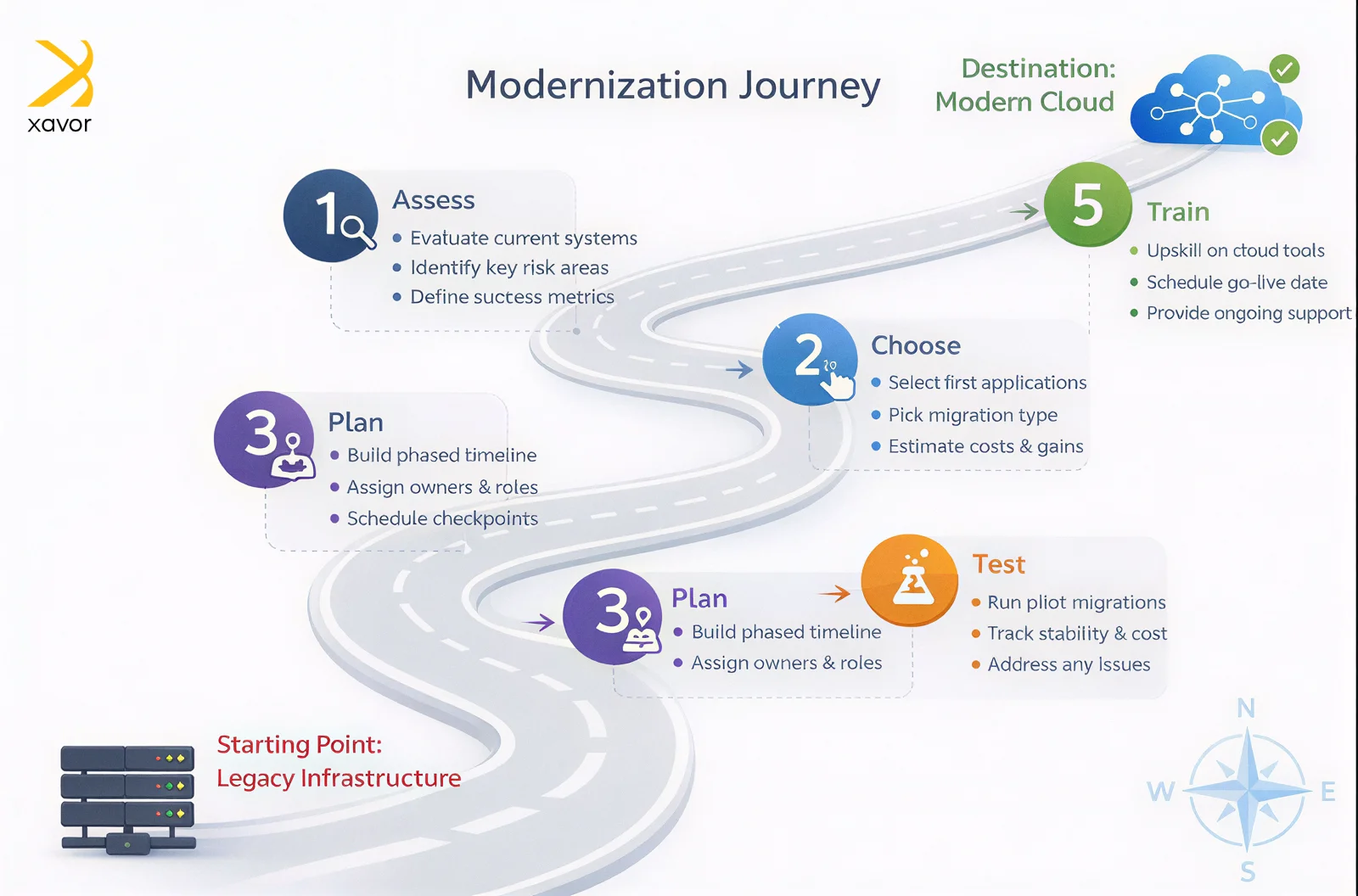
When you’re looking for legacy system modernization, it’s important to take a strategic, well-planned approach. Here’s a roadmap that you can follow:
1. Assess your current systems
The first step is to understand what you’re working with. Audit all your legacy systems, what do they do? How do they work with other systems? Are they creating bottlenecks or security vulnerabilities? A complete assessment will guide your decision on which systems to move to the cloud and when.
2. Choose the right cloud provider and services
Not all systems need to be migrated to the cloud in the same way. You have several options depending on your application modernisation needs and goals:
- Rehosting (Lift and Shift): This approach involves moving applications and data to the cloud with minimal changes. It’s fast and cost-effective but may not leverage all the cloud has to offer.
- Replatforming: This approach involves making small adjustments to your legacy system to take advantage of cloud features, such as auto-scaling and improved performance.
- Refactoring: Refactoring is a complete redesign of your application to leverage cloud-native technologies. This option offers the most long-term benefits but requires more time and investment.
3. Create a roadmap for migration
A clear cloud migration roadmap is essential for ensuring a smooth transition to the cloud. Start by identifying non-critical systems to move first, allowing your team to gain experience and fine-tune the process. This phased approach minimizes risk and allows you to address any issues before fully migrating critical systems.
4. Test and iterate
Once you’ve migrated parts of your business to the cloud, it’s essential to test. Ensure everything is running smoothly, and measure performance metrics like uptime, cost savings, and operational efficiency. The goal is to fine-tune the cloud environment so that you’re achieving the desired results.
5. Train your team and build cloud expertise
For many businesses, the skills gap is one of the biggest hurdles when adopting new technology. You may need to invest in cloud training for your IT team or even hire external experts to help with migration. Building a strong foundation of cloud knowledge within your team is essential to making the most of your new infrastructure.
Common risks in cloud migration and how to avoid them
Even with the best planning, cloud migration isn’t without its challenges. Some of the most common risks include:
1. Data migration challenges
Transferring data from legacy systems to cloud can be complex. It’s essential to have a clear data migration strategy that involves proper backups and testing to avoid data loss.
2. Managing costs
While cloud computing can be more affordable than traditional systems, it’s easy to overlook the ongoing costs. Cloud services operate on a usage basis, so it’s crucial to track usage and adjust resources accordingly to avoid overprovisioning or unnecessary costs.
3. Downtime during migration
If not properly planned, migrating critical systems can result in downtime. To avoid this, plan migration phases carefully, use cloud migration tools, and test systems thoroughly before full migration.
Real-world examples: Success stories in cloud migration
Here are some examples of how businesses have successfully modernized their legacy systems with cloud computing:
- Retail Sector: A mid-sized retail chain was struggling with outdated point-of-sale systems that couldn’t handle high traffic during peak seasons. By migrating to a cloud-based platform, they were able to scale their infrastructure quickly during busy times and reduce downtime by 50%.
- Healthcare Sector: A healthcare provider faced increasing cybersecurity threats due to outdated patient record management systems. After moving to a cloud-based system, they improved data security, reduced downtime, and streamlined patient care with cloud applications.
Conclusion: Why the cloud is the future of business infrastructure
Legacy systems may have been a reliable part of your business in the past, but they no longer meet the demands of modern operations. By moving to cloud computing, businesses can reduce risk, improve security, cut costs, and scale quickly to meet future challenges. The cloud is not just a solution for technology problems; it’s a strategic investment that helps businesses stay competitive in a rapidly changing world. By following a clear plan and choosing the right cloud strategy, businesses can ensure a smooth transition to modern, efficient, and secure systems.
So, if you are really worried about outages or security gaps, start with a risk-first assessment from Xavor. We identify the biggest failure points in your legacy stack, then build a step-by-step plan to reduce exposure while keeping operations stable with our cloud modernization services. To get started, contact us at [email protected].
The time to modernize is now. The cloud is ready to help you take your business to the next level.

FAQs
It means upgrading or replacing outdated systems that are costly to maintain and difficult to improve. It matters because legacy systems can slow operations, increase technical debt, and create security and integration issues.
Cloud platforms help reduce risk through stronger security features like encryption, identity controls, continuous monitoring, and automatic updates. They also improve reliability with built-in redundancy and better uptime, which lowers the chance of outages.
Start by assessing your current systems and identifying the highest risk areas. Then migrate in phases by moving less critical systems first, testing thoroughly, and upgrading core systems gradually. Choose the right method based on need: rehosting for speed, replatforming for improvements, or refactoring for the most long-term value.