Forward-deployed physical AI services for NVIDIA robotics development
Real-time systems powered by enterprise robotics software, backed by digital twin simulations, and with edge inference embedded for production environments.
Expand your physical AI footprint with dedicated expertise
NVIDIA’s physical AI software stack is the future of autonomous mobile robots. NVIDIA Jetson, Isaac, and Omniverse are complete platforms for building robotics AI solutions that can perceive and sense the world. But many businesses get stuck in their goals because they lack NVIDIA-specialized talent.
Xavor helps you get out of this situation with our physical AI squads, well-versed in the NVIDIA ecosystem. With cross-functional teams, our engineers cover every aspect of robotics development with a modular architecture.
We help bridge the gap between AI and deployed physical robots. Our integrated physical AI squads develop vision AI-guided robotics, edge AI solutions, and custom robotics that are human-like in their understanding of the physical rules of the real world.
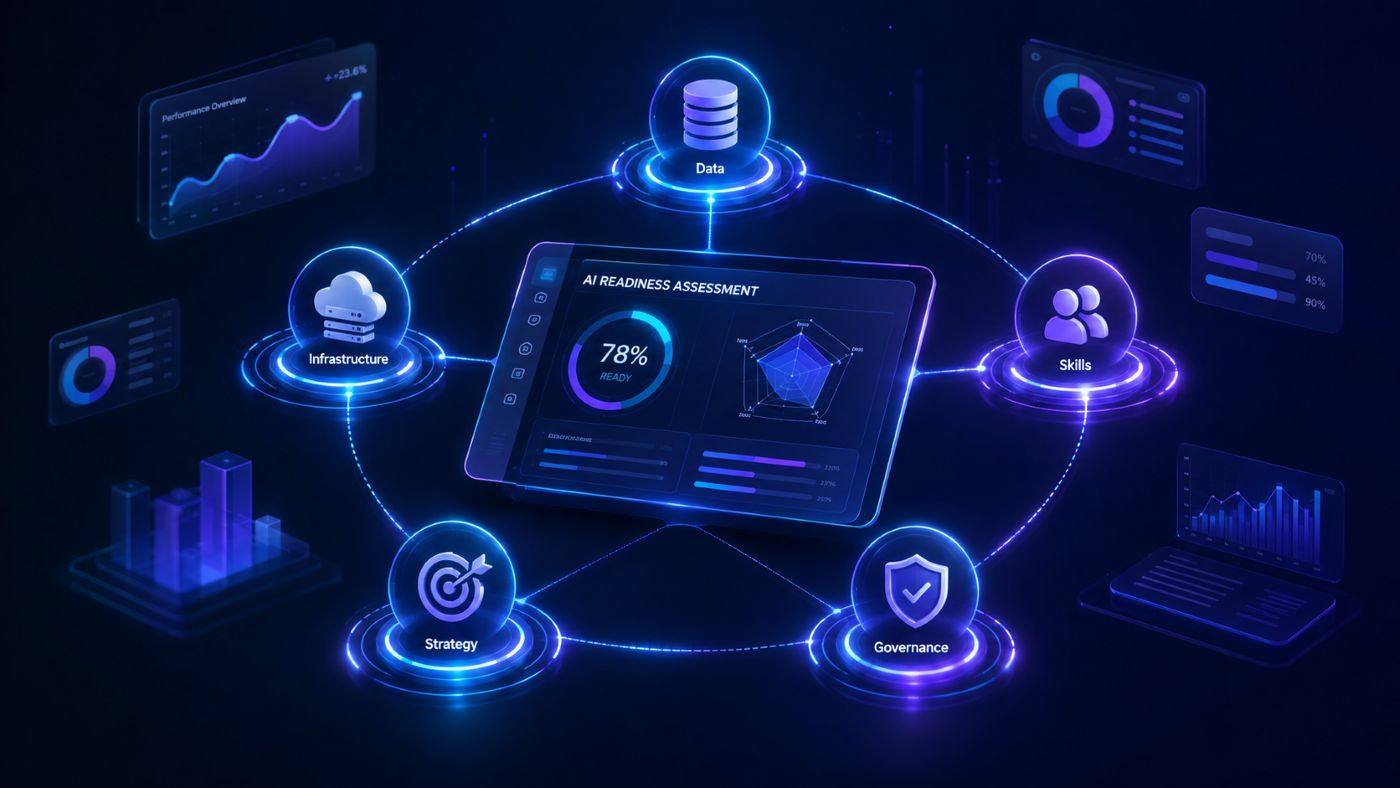
Physical AI Readiness Assessment
Precise NVIDIA stack selection for your goals, along with complete feasibility analysis, so you have a clear path to production.
Sim-First Prototyping Sprint
Functioning sim-to-real robotics in NVIDIA Omniverse/Isaac Sim before touching any hardware to ensure your robot behaves safely and efficiently.
Computer vision integration
Enabling robots to see and interpret their surroundings through object detection, tracking, segmentation, and activity recognition.
ROS and middleware integration
Developing scalable robotic software architectures with ROS1/ROS2 for seamless communication across subsystems.
EdgeOps and RobotOps
Reducing human intervention in robot workflows with monitoring, OTA updates, safe rollback strategies, and operational hardening.
Enterprise integration
Connect robotics systems to your ERP, CRM, data lakes, WMS, and other data platforms for visibility and automation.
Digital twin pipeline development
Generate synthetic data and evaluation sets in digital twins to accelerate perception and manipulation of training.
IoT integration
Connect edge sensors to cloud systems with secure device connectivity and telemetry for physical AI deployments.
Case Study: A social companion
robot made using NVIDIA modules
Rui is our home aide robot for elder care assistance. Developed by our spinoff NaviGait, Rui utili es a range of NVIDIA technologies to help caregivers and families take care of older adults with 24/7 monitoring and empathic communication.
Our engineers developed Rui as an active care companion that can familiarize itself with its settings and build upon it to provide emotional support to older adults, reduce caregiving burden, and provide peace of mind to families. And NVIDIA is the physical AI engine behind Rui that makes it all possible.
Xavor is your NVIDIA robotics partner for every industry and domain. We design collaborative robots according to the workflows of your facility.
Healthcare
Implement AI in healthcare robotics for patient monitoring, hospital logistics, and surgical assistance.
Use Cases
Intralogistics platforms that deliver meds, lab samples, and supplies across departments.
An on-device vision system that detects bed-exit or fall events in real time.
Warehouses and logistics
Use warehouse automation AI to design robots for supply chain backend with robotic workflow optimization and inventory visibility.
Use Cases
A mobile monitoring solution that patrols aisles and updates inventory in real time.
Warehouse sensors that can detect remaining pallets and empty-space status to reduce missed items and speed turnaround.
Retail
Create custom robotics that can perform shelf compliance, loss prevention, and autonomous monitoring in retail and e-commerce setups.
Use Cases
An edge-vision system that flags like concealment or missing items in real time and alerts staff.
Shelf-scanning sensors that can check compliance and create a restock task list per aisle.
Manufacturing
Employ physical AI to shift from legacy automation to modern product development workflows.
Use Cases
Digital twin factory optimization to replicate physical environments.
Camera checks that monitor the right fasteners are installed before the product moves to final test.
AI that improves physical operations
Real-world physical AI and robotics enablement
Xavor operationalizes physical AI as a scalable enterprise capability for your business. We build perception and edge inference systems that work in real environments.
Proof metrics we optimize for:
Defect reduction
Safety event reduction
Throughput increase
Reduced inspection cost
Improved uptime
Our dedicated team is ready to bring your digital vision to life with expert web development, delivering solutions that drive growth and elevate your online presence.
Empowering today, engineering tomorrow—driving possibilities since 1995.
We have the expertise, experience, and, more importantly, the trust of our clients to engineer physical intelligence in the most demanding environments.
Proven industry experience
30+ years of experience in designing and developing technology solutions for Fortune 500 companies.
NVIDIA
expertise
Our teams have developed physical AI products like Rui with full expertise in NVIDIA Isaac Sim, Jetson Orin, and Omniverse Robotics.
Forward-deployed squads
Xavor doesn’t just provide regular robotics staff augmentation. Our cohesive teams embed directly into your R&D process.
Security and compliance
Our physical AI robotics solutions are designed in compliance with local and international regulations.
Our physical AI development process
Accelerate physical AI development by 6–9 months
Xavor is unlike other NVIDIA robotics partners. We get the work done faster, with pinpoint accuracy.
Self-driving cars are the most visible example of physical AI systems. They use AI to perceive the real world with cameras, make decisions, and take physical actions based on those decisions in real time.
What is the difference between Gen AI and physical AI?
Generative AI focuses on creating new digital content based on patterns learned from large datasets, while physical AI focuses on sensing and acting in the real world through hardware.
How does physical AI learn?
Physical AI learns by combining data from sensors with feedback from actions. It’s often trained in simulation and then refined in the real world using methods like imitation learning, reinforcement learning, and supervised learning.
What do we need to get started on a physical AI project?
To start quickly, we typically need a clear problem statement, the target environment, hardware details, and any existing data. If you don’t have data yet, we can help you define the data collection plan, and a phased roadmap from prototype to pilot to production.
How long does it take to move from prototype to a real-world pilot?
We move projects quickly by doing things in phases: a small prototype to validate feasibility, then a controlled pilot, then scaled deployment. The biggest risks that cause delay are usually not the model itself, but data quality, edge cases in the real environment, hardware integration, and safety requirements.