

If you have to explain your jokes and code to others, then you need to work on your sense of humor and coding skills. A great piece of code needs little to no explanation as it is simple, readable, and easily understandable. This is especially important in mobile app development, where clean code improves performance, scalability, and user experience.
But writing clean, maintainable, and scalable code is a different story. Many developers take shortcuts or ignore best practices to save time, thinking the consequences are minimal. The reality? Unclean code accumulates silently, creating technical debt, slowing your workflow, and frustrating your future self.
In this guide, we’ll explore what bad code really is, why it’s expensive, and actionable strategies to write better code today.
Why code quality matters
Writing code that just works isn’t enough. Particularly, nowadays, when plenty of vibe coding tools can create code that does the bare minimum. But this is a huge misconception that software development is just writing thousands of lines of programming.
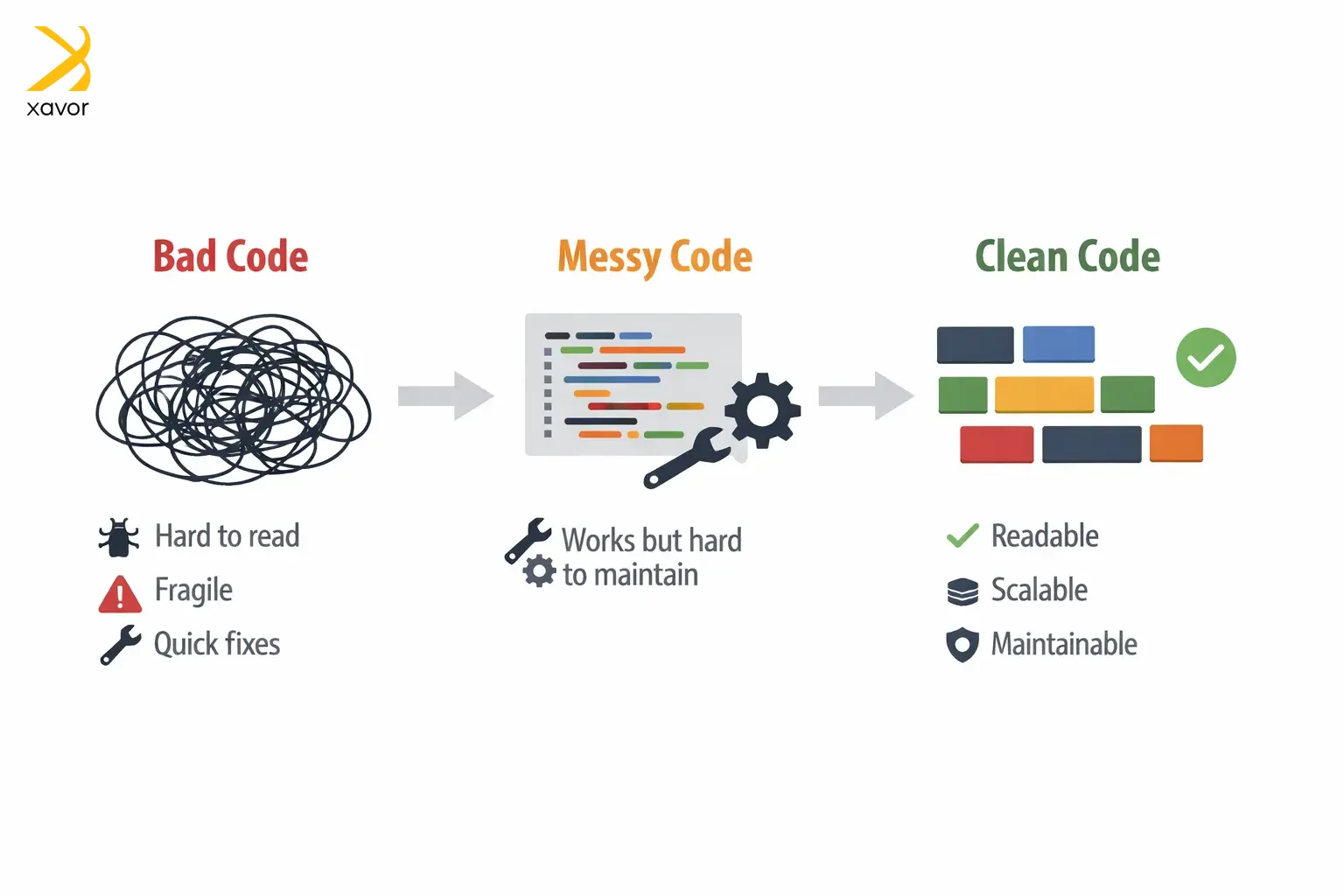
Software Development is essentially about problem-solving. And writing the code is actually just a means to an end. Good code should be readable, understandable, maintainable, and efficient. When your code meets these standards, it becomes easy for you or others to revisit, debug, and extend it in the future.
If your code doesn’t meet these benchmarks, your software will slow down your business instead of accelerating it.
What makes code bad?
Developers often talk about “bad” code. But there isn’t any textbook definition of what makes bad code bad. That is why non-technical folks can be a bit confused when they hear someone say they have bad code.
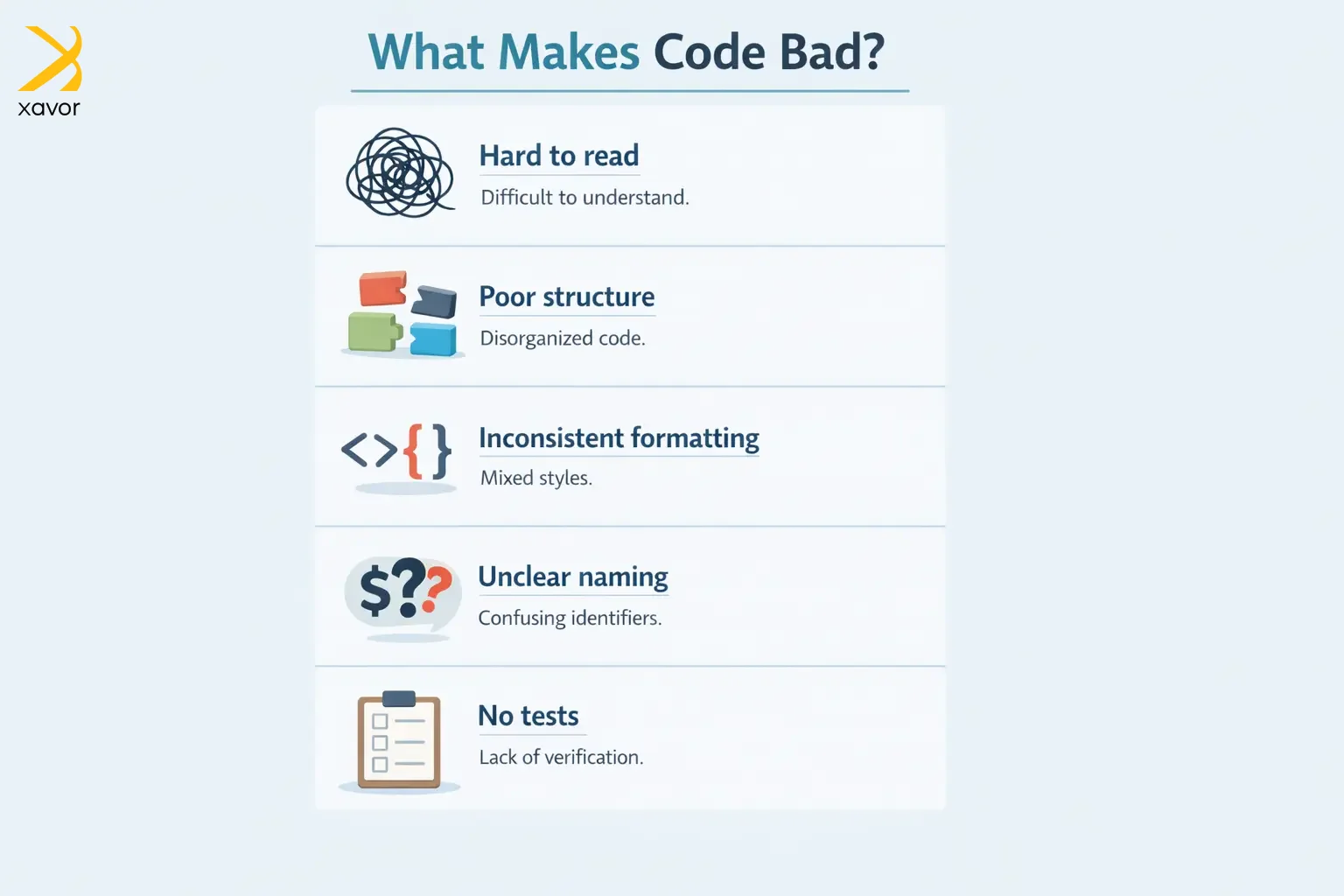
In short, a code is bad when it:
- Is hard to read or follow.
- Has poorly structured logic.
- Uses inconsistent formatting.
- Lacks meaningful naming.
- Is untested or poorly tested.
Even small amounts of bad code can snowball into major problems over time. These things accrue over time to cost you dearly when it is time to deploy or update your software.
Common signs of bad code
Bad code comes in many shapes. But all of them have some common issues that make them hard to understand and explain to outside stakeholders, such as:
1. Inconsistent naming conventions.
2. Overly complex or long functions.
3. Repetition of similar code blocks.
4. Lack of automated tests or documentation.
Why does bad code exists?
Developers have been grappling with bad code since the early days of programming. Spaghetti code was a term coined in the 1970s by developers frustrated with attempting to maintain and debug complex, unstructured, and convoluted code.
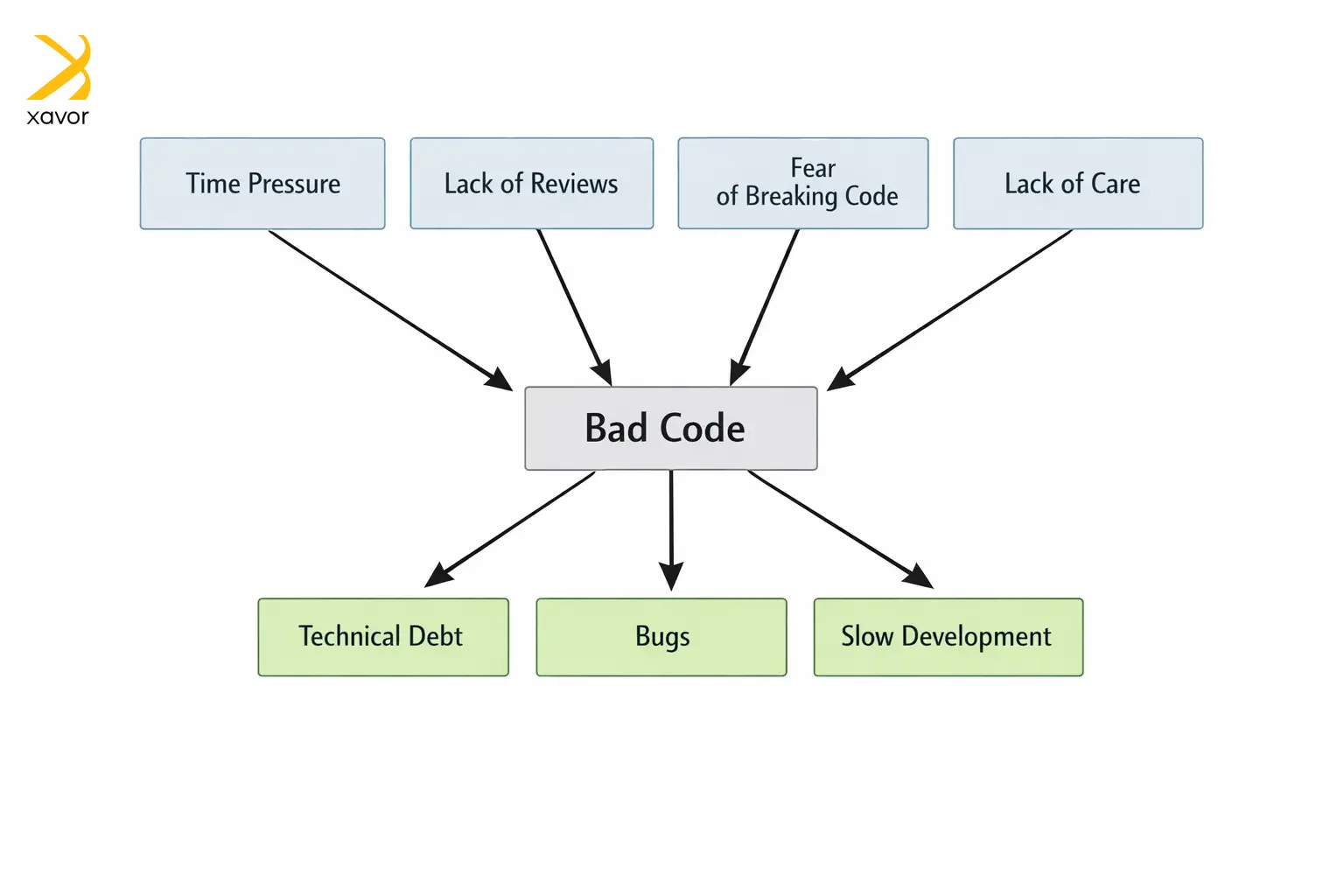
But why does it happen, though? Programmers don’t intentionally try to write bad code. In fact, they do everything to ensure it doesn’t exist in their program. But it does due to certain factors.
1. Lack of review processes
Developers write code alone, then submit it for review after it’s done. Now, reviewers are usually not part of the original thinking. They only see the final product without understanding the decisions behind the lines of code.
This leads to surface-level feedback, like questioning naming conventions for variables. Instead of catching fundamental design problems. As a result, either one person becomes a gatekeeper controlling everything, or you need so many approvers that nothing moves quickly.
That’s why most developers treat reviews as interruptions, rubber-stamping code to get back to their own work.
2. Time pressure
Software development timelines rarely go according to plan. Eleventh-hour changes, new feature additions that weren’t included, or another request from the client are all part of the job.
These changes, however, explain a lot of bad code. Managers push for faster delivery, so developers cut corners to meet deadlines. Everyone moves on before properly finishing. The pressure to start the next thing while fixing the last thing while finishing the current thing causes developers to rush things, which never ends well.
3. Inadequate technical controls
Changing existing code often feels terrifying. You might break something and become the scapegoat for production disasters. So, programmers hack around problems by:
- Pass extra boolean flags
- Nest if-statements deeper
- Duplicate functions to avoid touching working code
Rewriting from scratch is risky without tests capturing requirements. Meanwhile, new features keep coming for both the old system and the rewrite.
4. Lack of care
Some developers genuinely don’t care if their code is bad. Maybe they’re treating it like a temporary job. Or maybe they categorize certain work that ensures good code as extra that distracts from real work.
Others want to care, but they’re occasionally thrown into unfamiliar codebases, like front-end work when they’re backend specialists. So, they muddle through rather than learn properly.
The Hidden costs of bad code
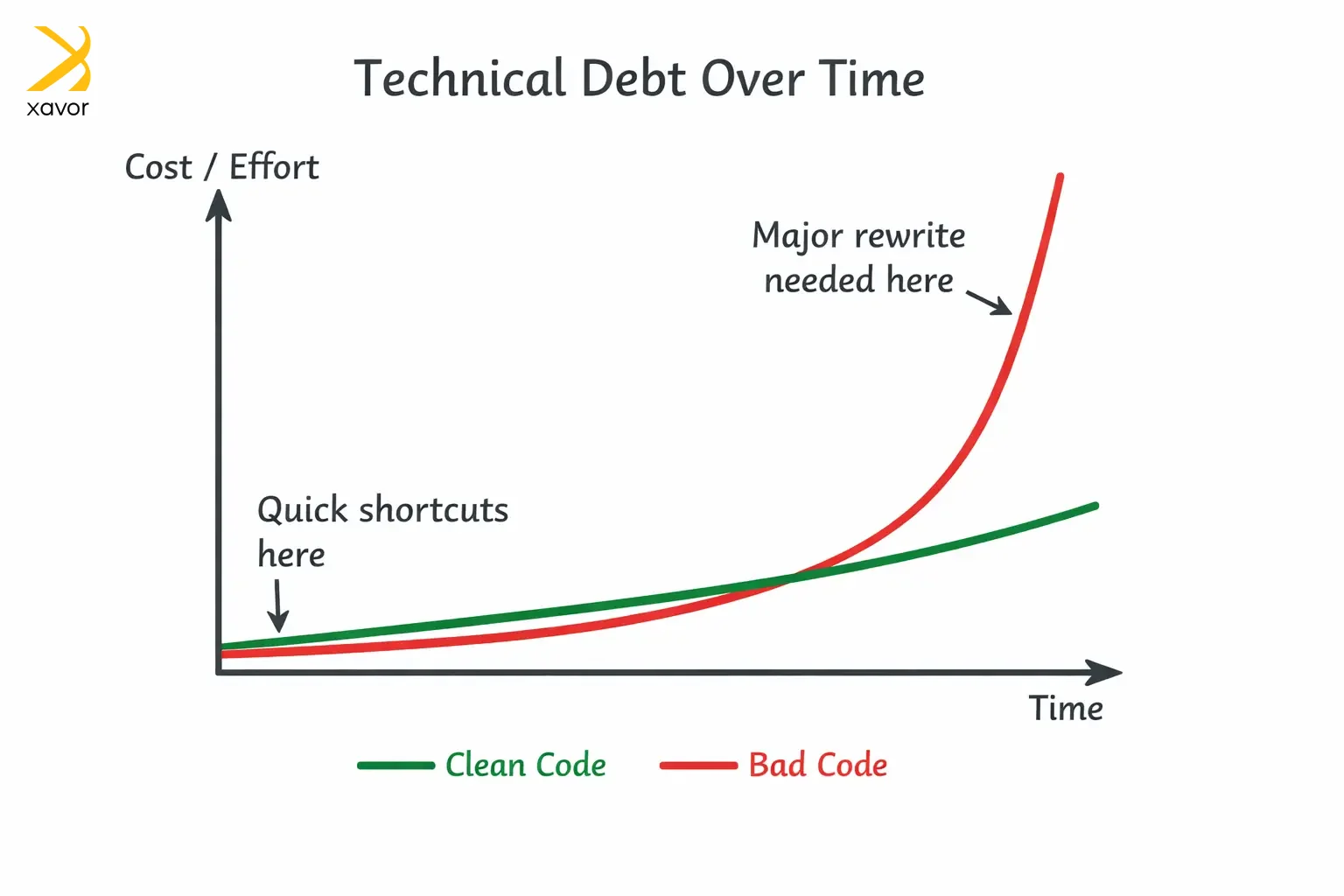
Bad code accrues over time. You may not feel its repercussions immediately. And things might seem to be working fine. But bad code starts to cause trouble in your software sooner or later. And then it gets really frustrating and tricky because you have to walk back in your tracks to find and fix the code causing the whole issue.
1. Time lost
Messy code wastes time often more than you expect. What could take minutes to update can turn into hours of deciphering unclear logic, slowing down development and delaying features.
2. Technical debt
Every shortcut you take today adds to technical debt. While it might save a few minutes now, it slows future development, increases risk, and can lead to costly rewrites down the line.
3. More bugs and frustration
Bad code is fertile ground for bugs. Unclear logic, poor naming, and duplicated code make it harder to pinpoint errors. Fixing one bug often introduces another, creating a cycle of frustration.
4. Collaboration challenges
Bad code hurts your team, too. Others may struggle to understand or extend your work, which reduces productivity and increases frustration, especially in large codebases.
5. Scalability problems
Poorly structured code doesn’t scale. Inefficient logic or tightly coupled systems can slow performance, make future feature additions harder, and lead to expensive rewrites.
How to recognize code problems
Now, as we discussed earlier, bad code happens because of various reasons. Sometimes programmers write bad code totally unintentionally. They can be under time pressure or trying to accommodate eleventh-hour changes that can make them rush things.
But there are some signs that if you’re writing bad code. If you notice any of these while coding, stop and fix these issues before going forward.
- Inconsistent naming: Variables like x, y, and temp tell nothing about their purpose. Use meaningful names like totalPrice, userCount, or fetchUserData.
- Lack of structure: Functions that do too much are hard to maintain. Break logic into single-purpose modules.
- No tests: Without automated tests, you risk breaking functionality with future changes.
- Messy formatting: Unreadable code increases errors and makes debugging harder.
Practical tips to improve your code
Always try to code in the best way possible. Even a few changes and lines of code can make a huge difference in your code’s readability and performance.
Here are some nudges that can mitigate any bad code.
Meaningful naming
Names should convey purpose clearly:
// Bad
function ab(a, b) { … }
// Good
function calculateTotalPrice(basePrice, taxRate) { … }
Consistent formatting
Use proper indentation and follow a style guide. Tools like Prettier or ESLint can automate this.
Single responsibility principle
Each function or class should have one job. Split functions that do more than one task.
Modular code
Break your code into reusable modules. This makes it easier to maintain, test, and scale.
Write tests
Unit, integration, and end-to-end tests catch bugs early and give confidence to refactor code safely.
Future-proofing your code
The right code is the basis for software projects that can extend and scale whenever the time demands it. There isn’t any single coding style that’ll make your program easily modifiable to accommodate newer technologies in the future.
However, the following rules of thumb underpin any good coding approach. Writing your code based on these principles will make future-proof your software in most cases.
- Favor readability over clever tricks.
- Use meaningful names consistently.
- Keep functions short and focused.
- Automate formatting and linting.
- Write tests to prevent regressions.
In short, clean, consistent code is easier to maintain, reduces bugs, and improves team collaboration.
Conclusion
Every line of code you write is a promise to your future self. Make it a good one. Bad code may save a few minutes today, but it costs exponentially more in the future through time lost, technical debt, bugs, and frustrated teammates.
Writing clean, maintainable, and scalable code is an investment in your future self — saving time, reducing errors, and making development more enjoyable.
Xavor creates software products for the web, mobile, and cloud platforms using the finest technologies and industry-best practices. Contact us at [email protected] to book a free consultation session.

FAQs
Bad code refers to software code that is poorly written, hard to read, inefficient, or prone to errors. It often lacks proper structure, documentation, or best practices, making it difficult to maintain or scale.
Syntax errors are mistakes in the code structure like missing brackets. Runtime errors occur while the program is running. In logical errors, the code runs but produces incorrect results due to flawed logic. Compilation errors are found by the compiler before execution. While semantic errors mean code that is syntactically correct but doesn’t do what was intended.
Spaghetti code is code that is messy, tangled, and hard to follow. You can identify it when the logic jumps around unpredictably, functions are overly long or interconnected, there’s little structure or modularity, and making small changes often breaks unrelated parts of the code. Sticky CTA