

Many companies are just starting to roll out ServiceNow in their workflows. Some early adopters of ServiceNow are also looking to expand the platform footprint in their business. Regardless of which of these stages you are in, picking the right ServiceNow implementation partner is helpful.
ServiceNow development & implementation services take time, trained resources, and experience with the platform. Now, most organizations don’t have the necessary ServiceNow skills and resources in-house. That is why outsourcing the platform’s implementation to ServiceNow implementation services is the logical and cost-effective choice.
However, ServiceNow partners are not all one and the same. The right ServiceNow partner understands the intricacies of the platform and knows how to blend the platform according to your unique business goals and workflows.
In this article, we will explain the key factors in vetting the best ServiceNow platform implementation partners.
ServiceNow implementation methodology (SIM)
ServiceNow implementation isn’t just about deploying a piece of software. It is a digital workflow automation platform that aims to digitally transform how enterprises operate. For this macro-level task, the ServiceNow platform has an official, standardized framework called SIM.
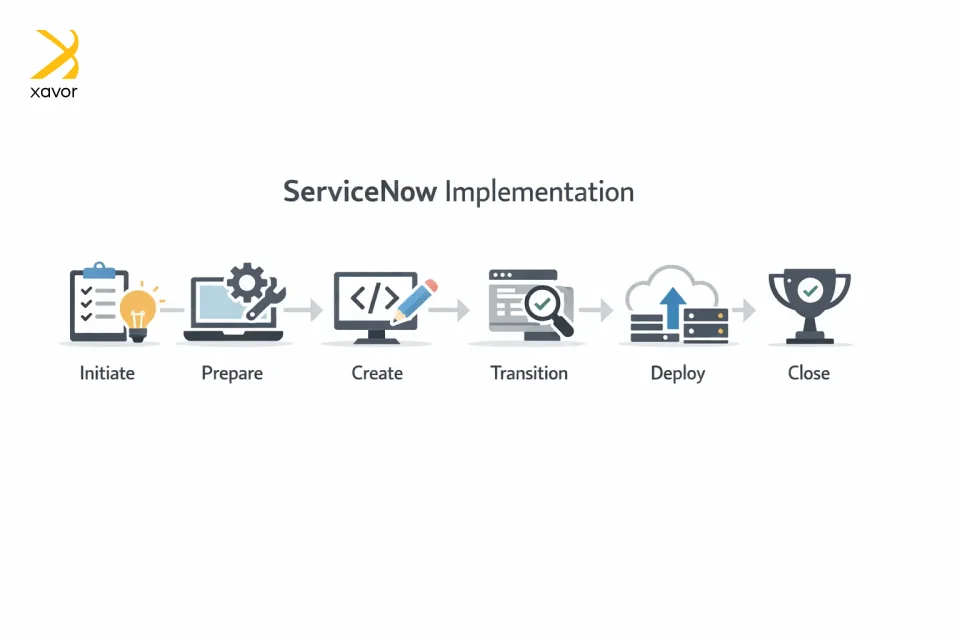
Whether it’s a freelance ServiceNow implementation partner or a ServiceNow consulting services provider, they all follow these six stages as outlined in the ServiceNow implementation methodology.
- Initiate: Define scope, stakeholders, governance, risks, and high-level requirements.
- Prepare: Set up environments, refine user stories, and build the implementation plan.
- Create: Configure the platform, build features, integrate systems, and perform unit testing.
- Transition: Conduct UAT, knowledge transfer, training, and final readiness checks.
- Close: Deploy to production, validate success criteria, and formally close the project.
SIM is a high-level framework, so it is broad and general. Therefore, businesses have the liberty to tailor it to their own processes, team structure, and project needs to make it truly effective.
What do ServiceNow implementation services do?
ServiceNow is a vast platform with several modules. It is also a customizable platform, as ServiceNow developers can make custom apps using platform-specific technologies.
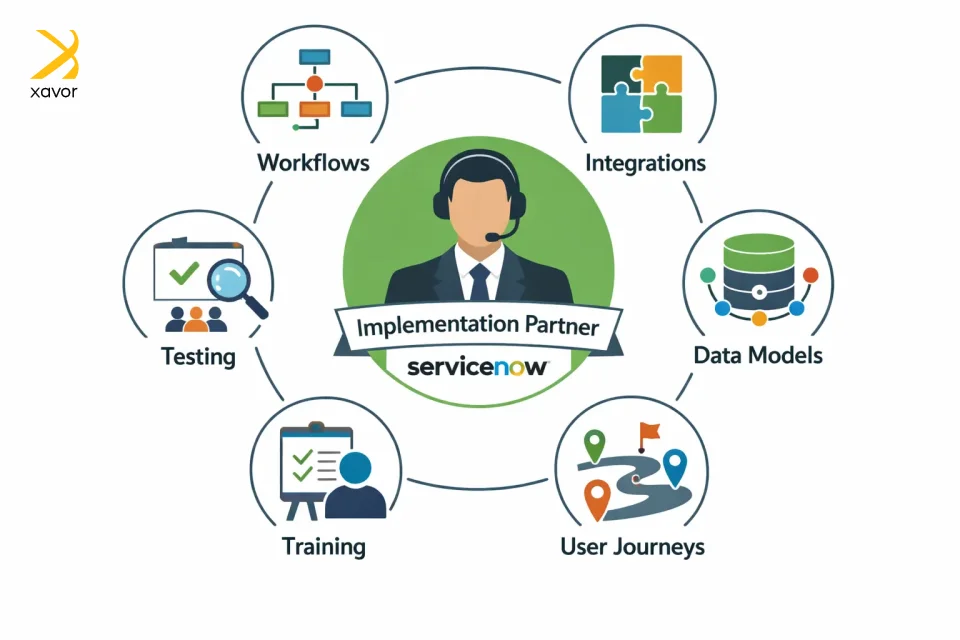
In that ecosystem, to design the right solution as per your business needs, a ServiceNow implementation partner does the following:
- Identify your processes, pinpoints, and expected outcomes
- Architect data models, integrations, and user journeys
- Create workflows, set up portals, and customizing modules
- Plan sprints, testing cycles, and managing changes
- Organize training sessions, documenting, and coordinating
A ServiceNow implementation partner creates solutions that perfectly fit your organization through a structured delivery method.
Five essential factors to find the right ServiceNow implementation partner
In this section, we’ll discuss the key factors involved in choosing the best ServiceNow implementation consulting. But first, you need to do a bit of homework before you go out looking for ServiceNow implementation partners in the first place.
Understand what you want from ServiceNow
Knowing yourself and your needs is a general tip for finding the right partner in any walk of life, whether it’s someone to spend life with or to implement ServiceNow. For the latter, you need to be crystal clear on questions like these:
- What are your goals for using ServiceNow? Is it to automate workflows, replace legacy systems, or something else?
- Exactly which ServiceNow module do you need? ITSM, ITOM, or do you need to use several?
- How big is your ServiceNow implementation project? What are your expected timelines?
- Do you want minimal ServiceNow customizations or highly tailored solutions?
If you’re not sure about the answers to these questions, contact professional ServiceNow consulting services to get a clearer picture. Implementation partners can also help you figure them out, but knowing what you want beforehand will make the job of your ServiceNow implementation partner easier.
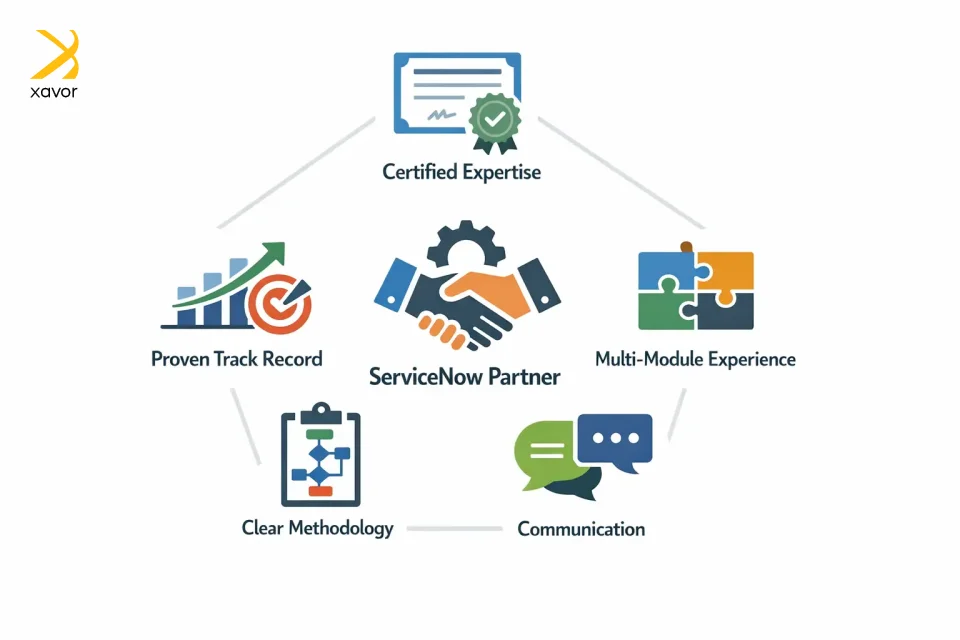
Once you have done this prerequisite, these are the green flags that you need to look for in the right ServiceNow implementation partner.
1. ServiceNow-certified expertise
No ServiceNow-certified developers or other resources are the biggest red flag you need to avoid. A legit ServiceNow partner has personnel who hold official ServiceNow certifications. Particularly those certifications that are critical to your implementation project.
For example, a customized ServiceNow implementation roadmap would require a lot of development. So, the partner you choose must have developers who have completed the ServiceNow Certified Application Developer (CAD) and ServiceNow Certified System Administrator (CSA) certifications.
2. Proven track record
Certifications are important, no doubt, but they can be passed with no real-world experience. A good ServiceNow implementation specialist has a proven track record to back up their credentials. Therefore, look for evidence that they’ve done this before.
You can do this vetting process through these steps:
- Ask for case studies with real results
- Testimonials from other clients
- Reviews on platforms like Clutch or Glassdoor
And if you want to use the oldest, most reliable method to verify real-world experience, the good old word of mouth is still an excellent way of finding the best services.
3. Implementation experience in multiple modules
It is better to avoid a partner who only knows one ServiceNow product. Even if it’s that one ServiceNow module you need right now, it’s only part of the picture. ServiceNow is designed to grow with your business.
Companies usually plan to start with a single ServiceNow product, but they often expand their use of ServiceNow later. If your partner only specializes in one area, you’ll be stuck searching for a new one every time you want to grow.
A strong partner understands the whole ServiceNow platform. They can guide you on which products fit your needs and how everything works together. Choosing a well-rounded, experienced team gives you dependable support now and as your ServiceNow environment grows in the future.
4. Clear, comprehensive methodology
The best ServiceNow implementation partners base their processes and methods around SIM. A SIM-based structured delivery methodology means the partner doesn’t guess their way through the project. They outline what will happen first, what comes next, and how each stage will lead to the final solution.
Such a partner constantly checks for ServiceNow implementation challenges, like delays, developer-related technical issues, or unclear requirements, and addresses them as early as possible.
5. Excellent communication and collaboration
Great communication and collaboration are essential to look for in a ServiceNow implementation partner. You want a team that talks openly, explains things clearly, and works smoothly with your people. When communication is strong, the whole project feels easier, faster, and more predictable.
The ServiceNow platform can be very technical. But ServiceNow certified implementation specialists don’t drown you in jargon; instead, they make complex topics easy to follow, so you always know what’s happening and why.
And most importantly, they take your feedback seriously. If something isn’t working or your priorities shift, they adjust the ServiceNow implementation project plan rather than pushing ahead blindly.
6. Post-go-live support and continual assistance
If a potential partner’s definition of success is merely implementing a ServiceNow product, then you might want to carry on your search. ServiceNow implementation is a continuous process. As your business changes, your ServiceNow needs will change too.
That’s why you should choose a partner who offers post-go-live support with regular assistance.
Here are some of the things that you must check in a partner’s package:
- Regular maintenance as ServiceNow releases its annual updates
- Rolling out new features and capabilities as per needs
- Sustained assistance helps train employees to increase the value you get from ServiceNow
Common mistakes to avoid while selecting a ServiceNow implementation partner
There are some things you can’t find in a book and only learn through experience. Therefore, we want to explain some common mistakes that are reported in industry circles when companies choose a ServiceNow implementation partner.
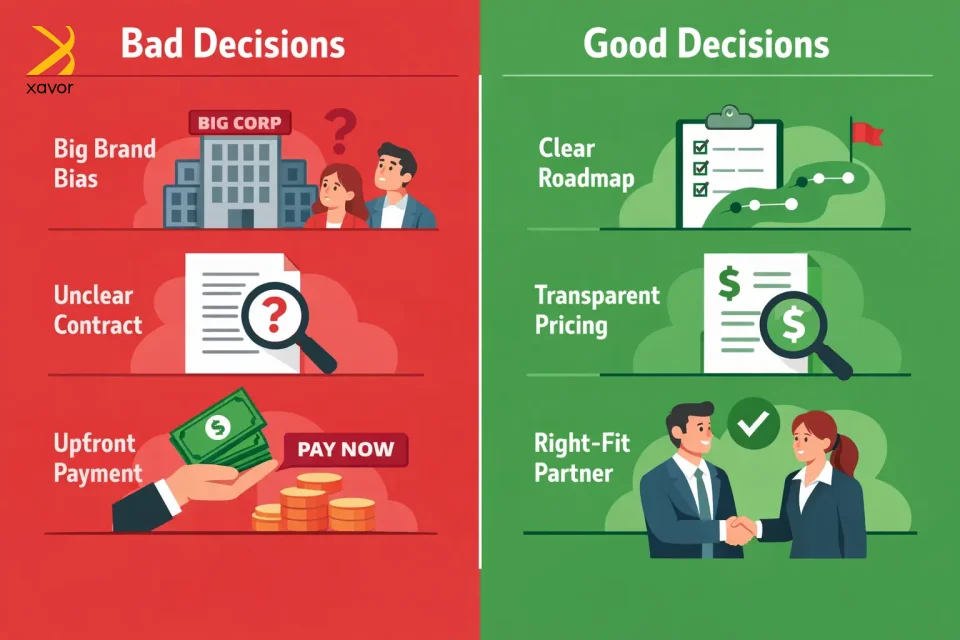
1. Assuming big-brand partners are automatically better
ServiceNow has different tiers of its official partnership program, and as of now, big-brand partners only make up around 8% of all ServiceNow partners. Naturally, people trust large ServiceNow consulting firms because they have more certifications, awards, and better marketing. But all that glitters is not gold.
To be honest, a lot of these awards aren’t necessarily the biggest or only indicator of expertise. Smaller ServiceNow implementation service providers with a handful of certified professionals can deliver big projects with equal results.
In fact, with a smaller team, you aren’t just another client on a long list. Your project matters to them. Your success directly reflects their reputation. They’re personally invested in delivering a great outcome, not just completing a contract.
Therefore, don’t make the mistake of discarding a small, boutique ServiceNow implementation partner just because of their size.
2. Giving upfront payments without a roadmap
You should never pay large amounts upfront unless the partner has given you a ServiceNow implementation roadmap. A trustworthy ServiceNow partner won’t ask for big payments before the work is clearly defined.
Instead, they will tie payments to specific milestones, which means you only pay as they deliver real progress. This helps you in your selection journey because:
- You know exactly what you’re paying for
- You stay in control of the engagement
- It creates accountability and reduces risk
3. Accepting vague or unclear proposals
A clear statement of work (SOW) and scope statement is essential when choosing a ServiceNow implementation partner. Many first-time ServiceNow customers don’t know what they should expect in a proposal, so they rush things and get started without exactly knowing:
- What will be delivered?
- How will it be delivered?
- When will it be delivered?
The best way to sniff out such partners is to look for vague words, like “advanced configurations” or “next-level optimization”. They look impressive but often hide uncertainty or give them the room to reinterpret the scope later.
Conclusion
Your choice of a ServiceNow implementation partner shapes how your organization will operate and grow using the platform in the years ahead. Too often, companies assume that any certified partner will do, or that the biggest name guarantees the best outcome.
Yet the real risks of a poor choice rarely show up on day one. They reveal themselves months later, in the form of stalled projects and workflows that never quite deliver what was promised.
Xavor’s ServiceNow implementation services bring deep, multi-module ServiceNow expertise, structured and SIM-aligned delivery methodology, clear communication, transparent SOWs, and proper post-go-live support. Our ServiceNow-certified professionals focus on excellence and consistent delivery.
Contact us at [email protected] to book a free ServiceNow consulting session with our trusted experts.

FAQs
ServiceNow implementation is the process of configuring and deploying the ServiceNow platform to automate and manage business workflows such as IT service management, HR, and customer support.
The three main parts of ServiceNow are: 1) Now Platform which is the core foundation that powers workflows, data, and applications. 2) Applications/Modules provides solutions like ITSM, HR, and Customer Service built on the platform. 3) Database & Configuration (CMDB) stores all records, assets, and relationships across the system.
Many large global organizations use ServiceNow, including companies like Accenture, IBM, Deloitte, Siemens, Coca-Cola, and General Electric. It’s widely adopted across industries for IT service management, HR, and enterprise workflow automation.