
Everything that is important to get by in daily life has an app or an online service now. And APIs are the building blocks that make modern software like these possible on scale. But that also makes them a lucrative target for hackers, and that’s why you need API security solutions to prevent hackers from stealing sensitive data.
The pace of digital transformation means new APIs are constantly introduced. And web app security services can no longer afford to discover vulnerabilities after an attack has occurred. So, organizations need to implement an API security platform timely to close security gaps before they become business risks.
In this blog, we’ll look into the importance of API security solutions in protecting your web apps from cyber threats.
What is API security?
APIs (Application Programming Interface) are the front door entrance into a system. Software programs usually need access to each other’s database to perform any action. However, giving an external program direct access to your app’s data is inviting trouble.
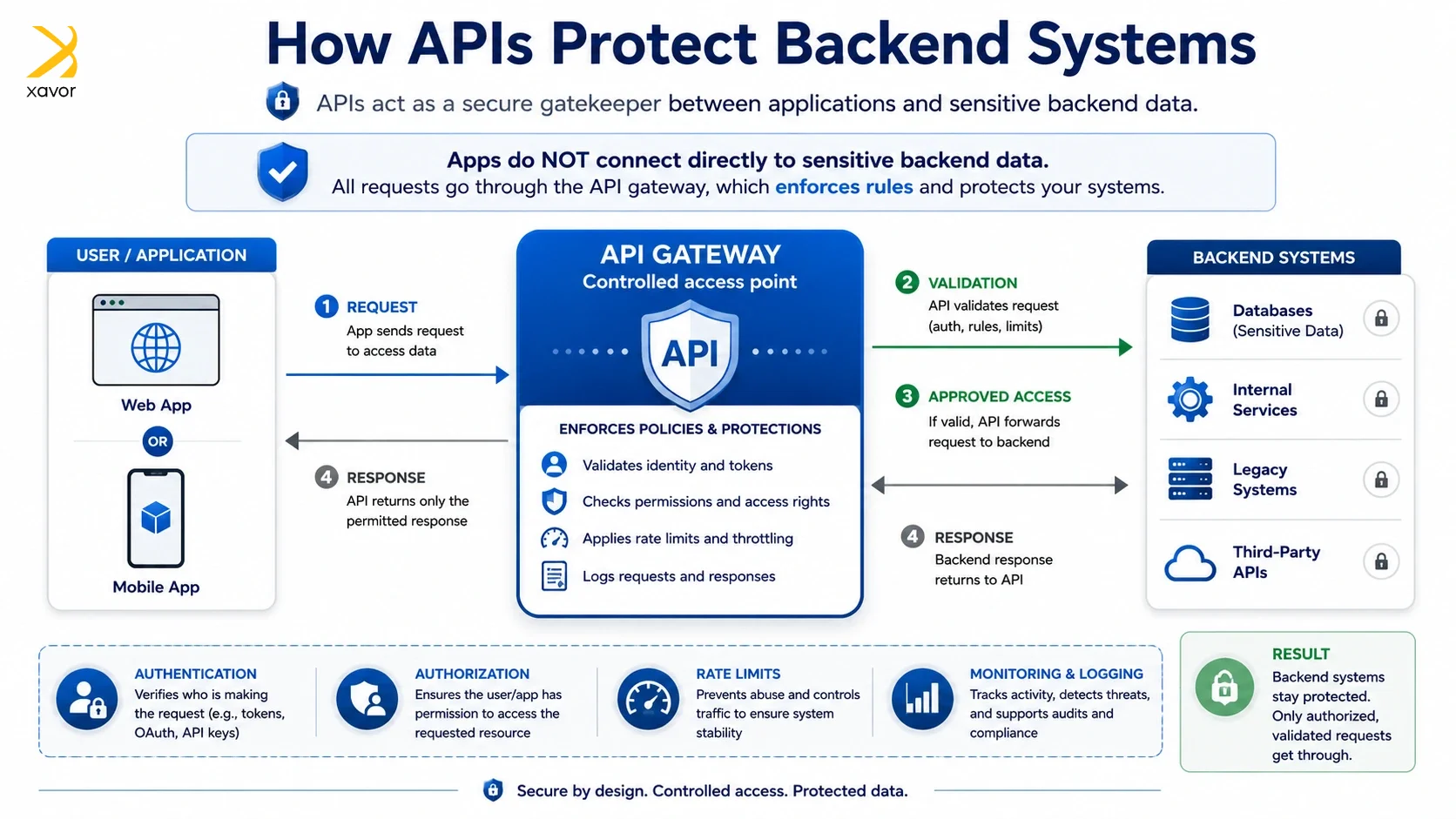
So, instead developers create APIs that define how programs interact with each other. APIs set a list of protocols or rules that determine how different components communicate and exchange information.
Let’s expand on this through an example.
Uber calling Google Maps
People use ride hailing like Uber apps. You immediately see your and the driver’s location on a map along with the route and estimated time when you request a ride.
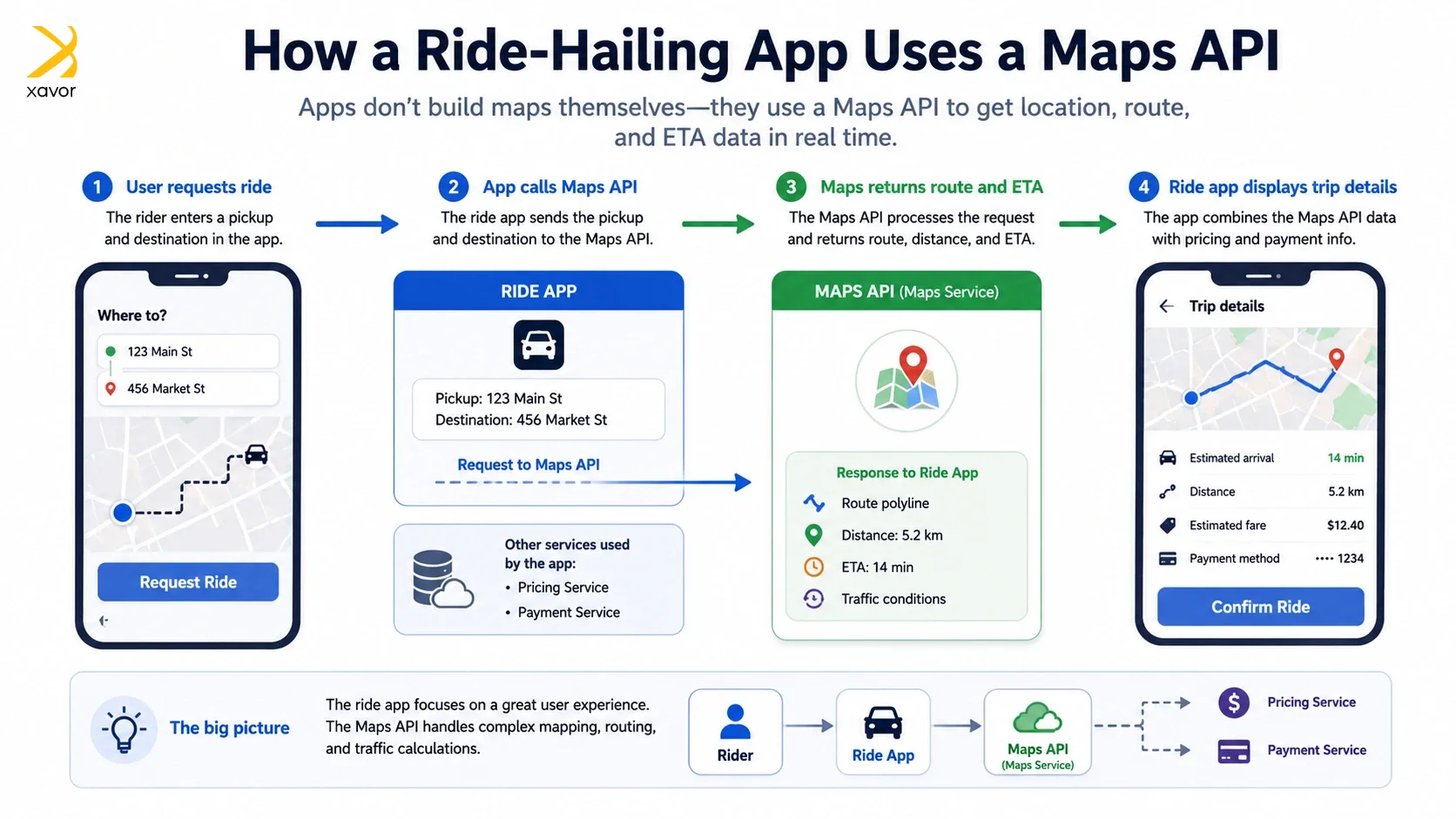
Now, Uber isn’t doing all of that by itself. It uses APIs to borrow mapping capabilities from Google Maps instead of building them itself. Google provides routes and locations, and things like that. While Uber adds ride pricing and payments. APIs make this efficient and connected.
Where hackers can sneak in
There are different layers in the above example. And attackers can potentially target any layer. But most hackers exploit one of the systems at either end or abuse the API in ways the designers didn’t anticipate.
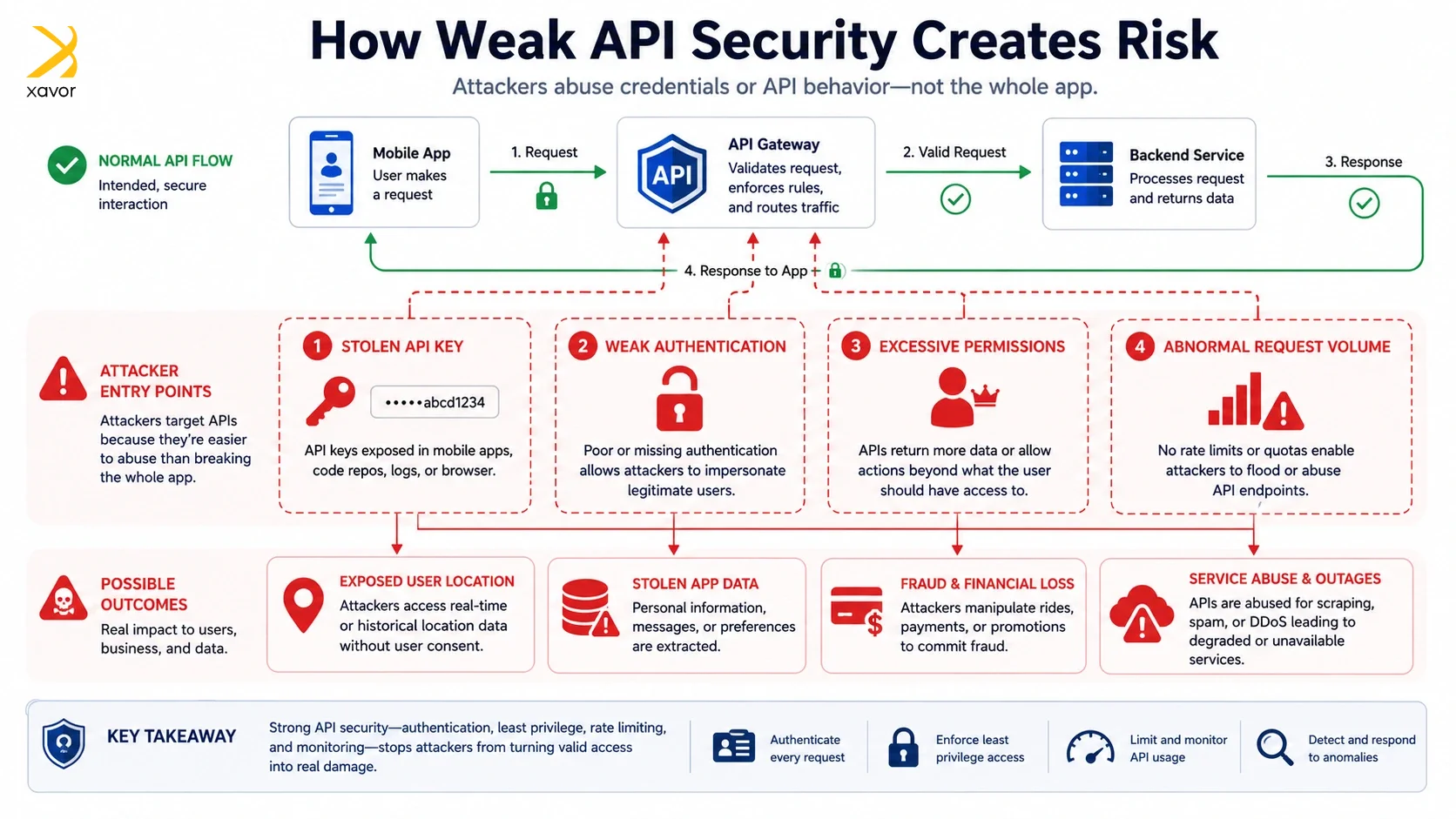
When Uber calls Google Maps, it typically proves its identity with an API key or other credential. Hackers can steal this key without proper API security solutions. Therefore, an attacker gains access to whatever privileges Uber’s key has, such as:
- Your GPS location
- Historical app data
The importance of API security solutions to protect the digital front of your business
API protection solutions guard your digital asset against threats of all sorts. The following are the benefits of building a defense for APIs in the current cybersecurity environment.
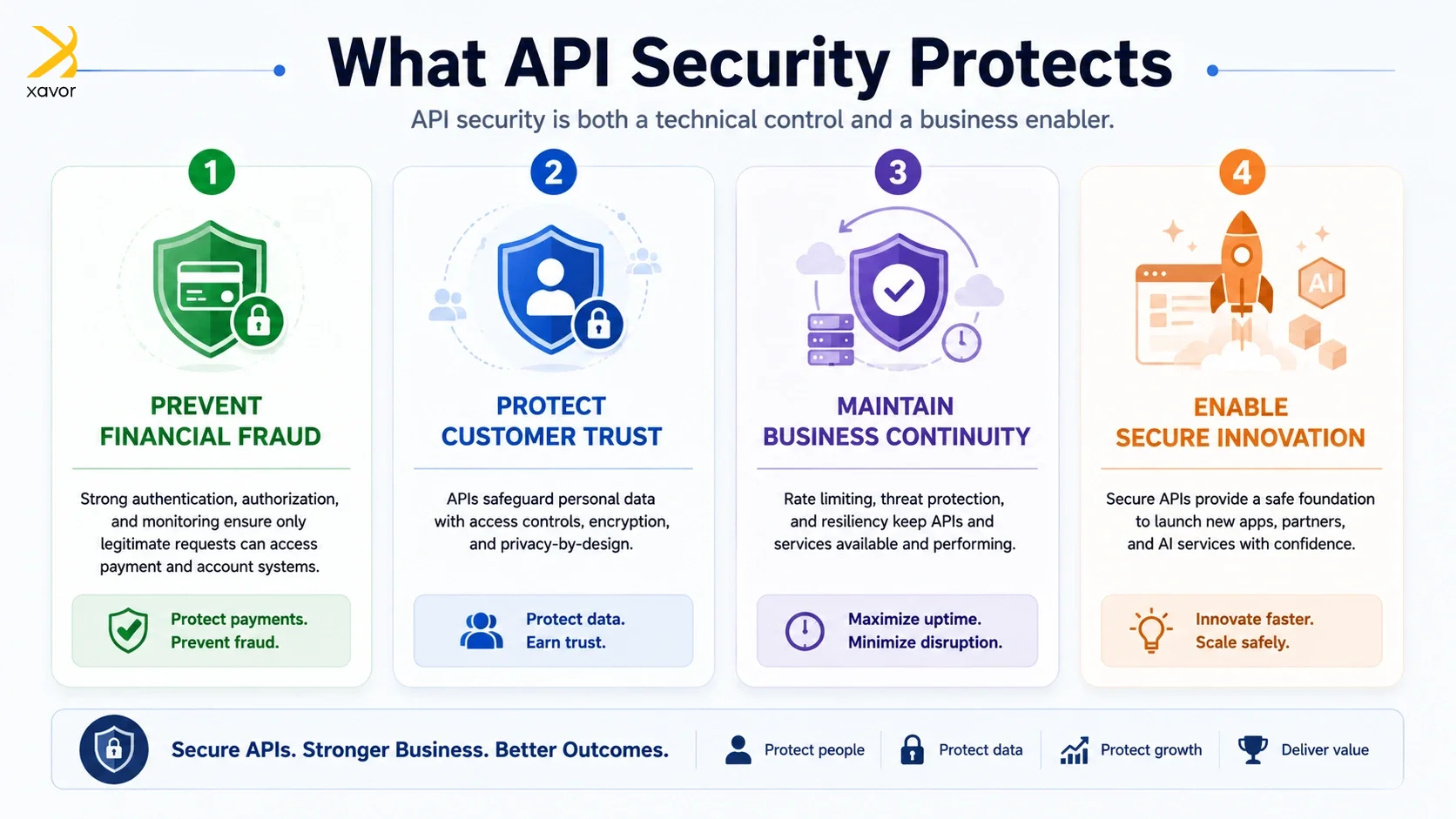
1. Preventing financial fraud and theft
Moving money at the click of a button is possible because of APIs. Therefore, API security solutions need to be in place to make sure that only the right people and systems can perform actions that affect your money.
And modern APIs do much more than exchange data. They can call services like messaging platforms and AI agents to perform key operations in Fintech products. If these APIs are not properly secured, attackers will have an open season to exploit them to hack your key financial information.
API security solutions also protect businesses from indirect financial attacks. Many organizations rely on cloud infrastructure and third-party services that charge based on usage. An attacker who gains access to API credentials or exploits a vulnerable API can generate massive numbers of requests or repeatedly trigger paid services.
Hackers usually call this tactic “Denial of Wallet” attack, a method that leads to service disruptions and wasted resources. But all of that can be prevented if you have a strong API security platform in place.
2. Building digital trust with customers
APIs have become the go-to way of managing customer information. Every time a user logs in to update their profile etc., APIs are often handling that exchange behind the scenes. And attackers know this too. A single vulnerable API can expose a customer’s personal information or sensitive business data.
Therefore, API security solutions help ensure that only authorized users and systems can access sensitive information. They continuously monitor API activity to pinpoint unusual behavior that prevents unauthorized access before it turns into a breach.
The outcome is about more than compliance. In a market where trust is increasingly difficult to earn and remarkably easy to lose, protecting customer data protects the reputation that organizations spend years building.
3. Maintaining business continuity
Modern businesses are a web of interconnected digital services. They need to be present on websites, mobile applications, and these days, as AI-powered experiences as well. That all depends on APIs to function. When APIs are disrupted, business operations often slow down or stop altogether.
API security solutions help organizations stay resilient by detecting and blocking attacks before they impact service availability. In practical terms, API security tools help ensure that customers can continue accessing business services without any fuss. Reliability may not always make headlines, but its absence certainly does.
4. Enabling secure innovation and growth
Every new digital initiative introduces new APIs. They are the connective tissue that makes innovation possible.
However, the challenge is that growth often expands the attack surface. More APIs create more opportunities for misconfiguration and overlooked vulnerabilities. API security solutions provide the visibility and governance needed to manage this complexity. They allow organizations to adopt new technologies, including AI-video platforms, and create new digital experiences with confidence, knowing that innovation is not coming at the expense of security.
In many ways, this is the strategic value of API security. It does not simply reduce risk. It enables organizations to move faster, connect more systems, and unlock new opportunities while maintaining control over the digital front door of the business.
Types of APIs and which security solution suits each
APIs come in many different forms, supporting use cases across data science and modern digital application. However, that also means each type requires a specific API security solution that fits the bill.
| API type | What it does | Use cases | Major security risks | Best security solution |
| Open APIs | APIs that are publicly available for developers, partners, or third parties to use. | Payment gateways, mapping services, social media integrations, weather APIs. | Credential theft, abuse of API keys, excessive requests, data scraping, denial-of-service attacks. | API Gateway with authentication, rate limiting, bot protection, and threat detection to control access and prevent abuse. |
| Partner APIs | APIs shared with trusted business partners to enable collaboration and data exchange. | Supply chain integrations, logistics tracking, B2B data sharing, marketplace platforms. | Unauthorized access, excessive privileges, compromised partner credentials, data leakage. | API access management and Zero Trust security with strong authentication, authorization, and continuous monitoring. |
| Internal APIs | APIs used within an organization to connect applications, services, and systems. | ERP integrations, HR systems, CRM platforms, internal microservices. | Insider threats, misconfigurations, lateral movement after a breach, shadow APIs. | API discovery and runtime protection to identify unknown APIs, enforce policies, and monitor internal traffic. |
| Composite APIs | APIs that combine data or services from multiple backend systems into a single request. | Customer portals, dashboards, e-commerce checkout processes, super apps. | Exposure of sensitive data across systems, broken authentication, complex attack paths. | API security platforms with behavioral analytics and data governance controls to monitor interactions across connected services. |
| Web APIs | APIs designed to enable communication between web applications and services over the internet. | Mobile apps, SaaS platforms, cloud applications, AI-powered services. | Broken authentication, excessive data exposure, injection attacks, API abuse. | Web Application and API Protection (WAAP) solutions that combine API security, web application firewall (WAF), and threat detection capabilities. |
| Microservices APIs | APIs that enable communication between independently deployed services in modern cloud-native applications. | Banking platforms, streaming services, e-commerce platforms, enterprise SaaS. | Service-to-service attacks, unauthorized access between workloads, API sprawl. | Service mesh security and API runtime protection with mutual TLS (mTLS), identity-based access controls, and continuous monitoring. |
| AI APIs | APIs that connect applications to AI models, agents, and LLM-powered services. | Chatbots, virtual assistants, AI copilots, automated workflows. | Prompt injection, data leakage, excessive consumption costs, unauthorized model access. | AI-aware API security and runtime monitoring with access controls, usage governance, prompt protection, and anomaly detection. |
Conclusion
APIs have quietly become the operating system of the digital economy. They power the applications we use every day and increasingly serve as the foundation for AI-driven experiences. But that same connectivity creates new pathways for risk.
In many ways, the conversation around API security solutions reflect a larger reality that every competitive business advantage today depends on trusted digital interactions. Enterprise growth increasingly depends on the ability to connect systems without exposing the business to unnecessary risk.
Xavor helps organizations secure their API ecosystems with governance and protection needed to stay ahead of evolving threats. Our developers use modern defense mechanisms, like Zero Trust architectures and cloud-native security strategies to strengthen the digital front door without slowing innovation.
Contact us at [email protected] to book a free consultation session.

FAQs
Secure an API by enforcing strong authentication and authorization, validating all inputs, and applying rate limiting to prevent abuse. Regular monitoring, logging, encryption, and least-privilege access controls help detect threats and protect sensitive data.
APIs can expose sensitive data, enable unauthorized access, or be abused through stolen credentials, weak authentication, and excessive permissions. Poorly secured APIs can also lead to fraud, service disruption, data breaches, and compliance violations.
API abuse occurs when attackers or unauthorized users misuse an API in ways it was not intended, such as using stolen API keys, scraping data, bypassing business rules, or sending excessive requests. This can lead to data exposure, fraud, service disruption, and increased operational costs.