

For many businesses, downtime is not a small technical issue. It can stop work, delay services, upset customers, and cause direct financial losses. In industries that rely heavily on connected systems, even a short outage can create problems that spread quickly across teams and departments. That is why reducing downtime has become a serious priority for companies that want to protect both performance and customer trust.
The good news is that downtime can be reduced with the right IT support system. Businesses need more than quick fixes. They need a solution that helps teams manage issues effectively, respond faster, and prevent recurring problems. ServiceNow ITSM helps by bringing important IT tasks like incident management, service requests, and change management into one place. This helps businesses reduce disruptions and keep daily operations running smoothly.
Let’s explore IT solutions for industries, especially ServiceNow ITSM, to reduce downtime and keep systems reliable.
Understanding downtime in modern industries
Downtime can happen for many reasons. It may be caused by hardware failure, software bugs, network issues, human error, or even poor communication between teams. In large organizations, systems are often connected. A small issue in one area can quickly affect multiple departments.
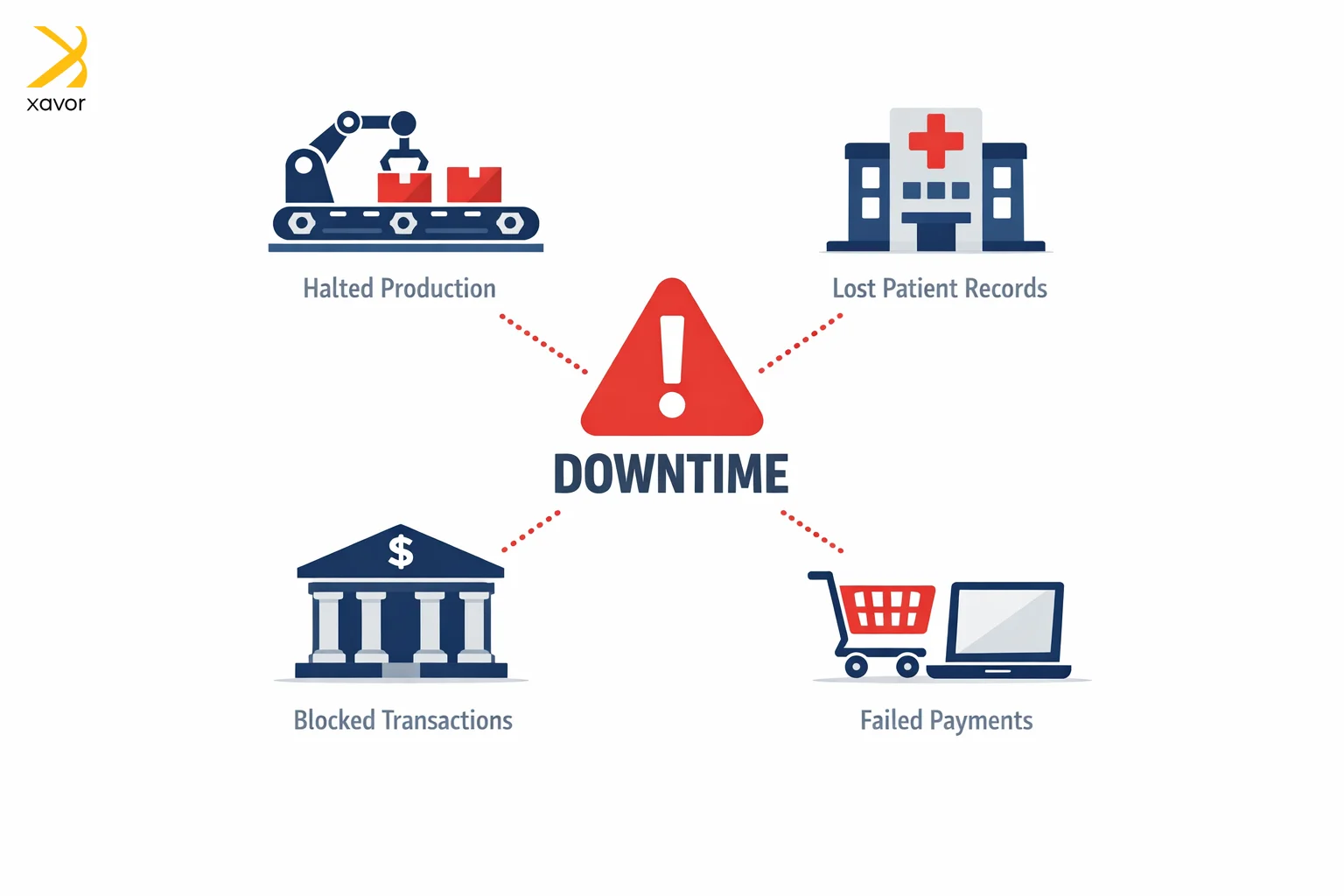
For example:
- In manufacturing, downtime can stop production lines and delay shipments
- In healthcare, system outages can limit access to patient records
- In banking, service interruptions can block transactions and frustrate customers
- In retail, downtime can affect online stores and payment systems
Because of these risks, businesses are focusing on prevention as much as resolution.
What is ServiceNow ITSM?
ServiceNow ITSM is a cloud-based platform for managing IT services in a structured, efficient way. It brings together processes such as incident management, problem management, change management, and service requests into a single system.
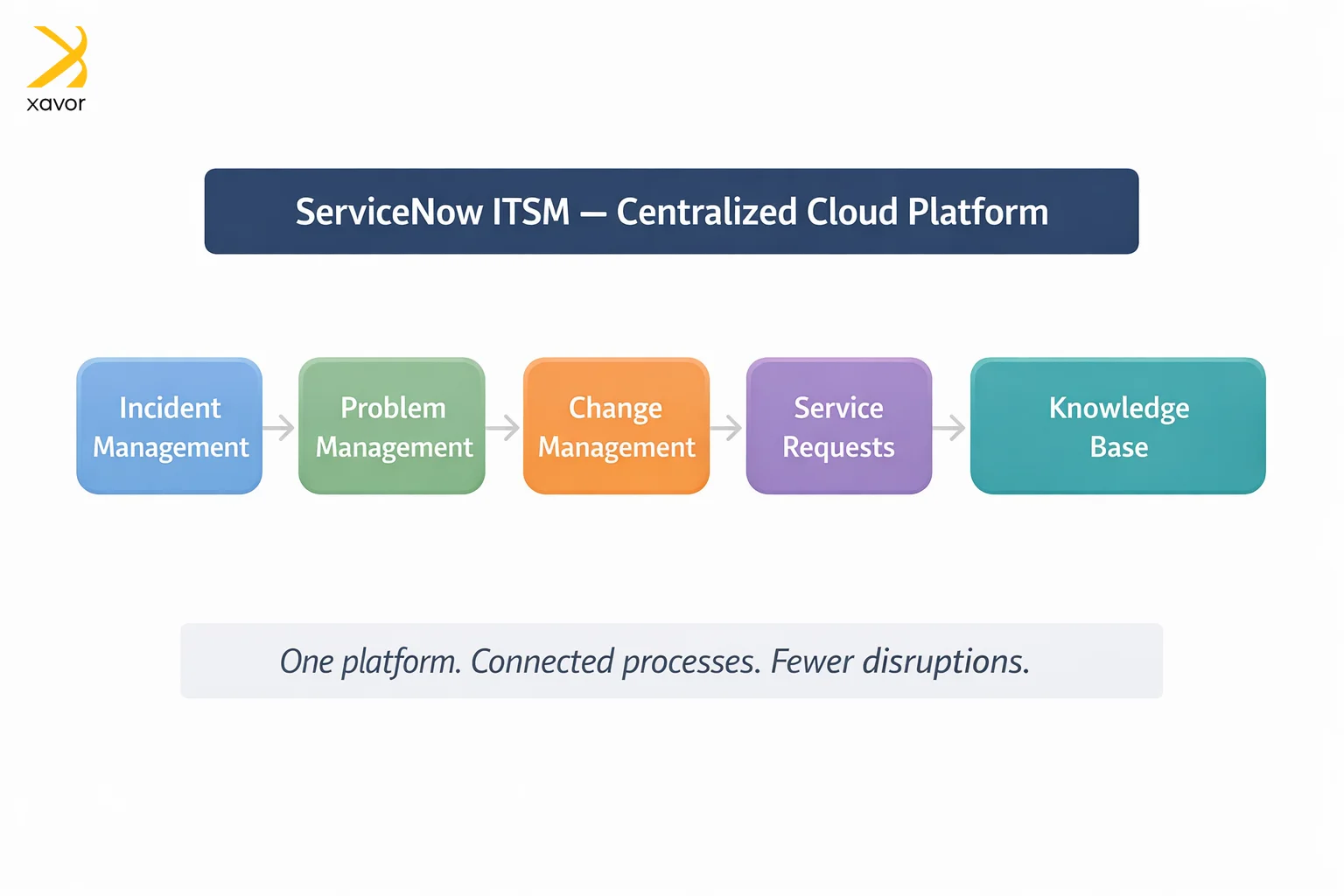
Instead of scattered tools and manual processes, everything is handled in a centralized platform. This makes it easierF to track issues, assign tasks, and ensure that nothing is missed.
The real value comes from how it connects people, processes, and technology.
Key ways ServiceNow ITSM reduces downtime
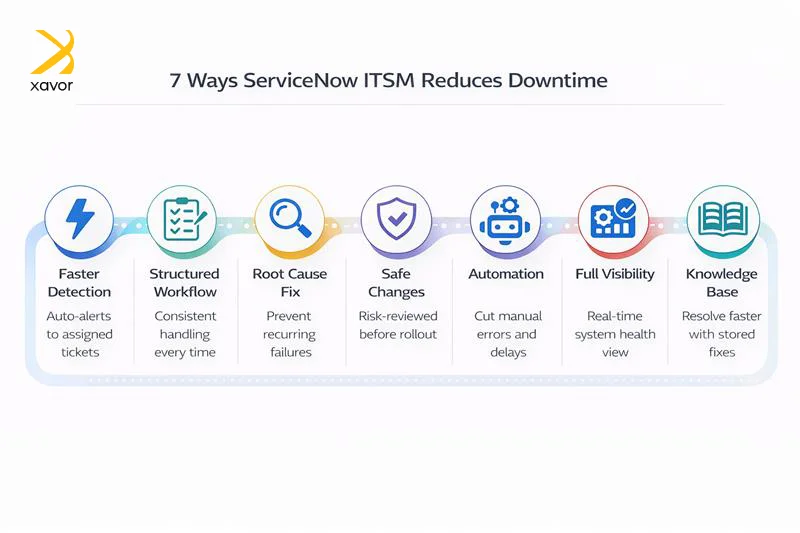
1. Faster incident detection and response
One of the biggest causes of extended downtime is delayed response. If a problem is not identified quickly, it continues to grow.
ServiceNow ITSM integrates with monitoring tools to detect issues as soon as they occur. Alerts are automatically converted into incidents, which are then assigned to the right teams.
This reduces the time between detection and action. Teams do not have to wait for manual reporting. They can start working on the issue immediately.
2. Structured incident management
When an incident occurs, confusion can slow down resolution. Without a clear process, teams may duplicate work or miss critical steps.
ServiceNow provides a structured workflow for incident management:
- Incidents are logged automatically or manually
- They are categorized and prioritized
- Tasks are assigned to the right team
- Progress is tracked in real time
This ensures that every incident is handled consistently. It also helps teams focus on high-priority issues first, reducing the impact on business operations.
3. Root cause analysis with problem management
Fixing an issue once is not enough if it keeps happening again. Repeated incidents increase downtime and waste resources.
ServiceNow ITSM includes problem management and better ticketing systems, which helps teams find the root cause of recurring issues. Instead of just fixing symptoms, teams analyze patterns and identify the underlying problem.
For example, if a server keeps crashing, problem management helps determine whether the issue is due to hardware, software, or configuration problems.
Once the root cause is identified, a permanent fix can be applied. This reduces the chances of future downtime.
4. Controlled changes with change management
Poorly managed changes cause many outages. A small update or configuration change can lead to unexpected issues.
ServiceNow ITSM includes a change management process that ensures all changes are reviewed and approved before implementation.
Key features include:
- Risk assessment before changes are made
- Approval workflows involving relevant stakeholders
- Scheduled implementation to avoid peak hours
- Rollback plans in case something goes wrong
This reduces the risk of downtime from changes and ensures updates are handled safely.
5. Automation of routine tasks
Manual work is not only slow but also prone to errors. Automation helps reduce both time and mistakes.
ServiceNow allows organizations to automate repetitive tasks such as:
- Ticket routing
- Notifications and updates
- Basic troubleshooting steps
- Password resets and common service requests
By automating these tasks, IT teams can focus on more complex issues. It also speeds up response times, which directly reduces downtime.
6. Better visibility across systems
Lack of visibility is a common challenge in large organizations. When systems are spread across different tools and teams, it becomes hard to understand what is happening.
ServiceNow provides a centralized dashboard where teams can see:
- Active incidents
- System health
- Service performance
- Dependencies between systems
This visibility helps teams identify potential risks before they turn into major issues. It also improves coordination between different departments.
7. Knowledge management for faster resolution
When an issue occurs, having access to the right information can make a big difference.
ServiceNow ITSM includes a knowledge base where teams can store it solutions for industries, troubleshooting steps, and best practices. When a similar issue happens again, technicians can refer to this knowledge and resolve it faster.
This reduces the time spent on investigation and helps maintain consistency in problem resolution.
Industry Use Cases
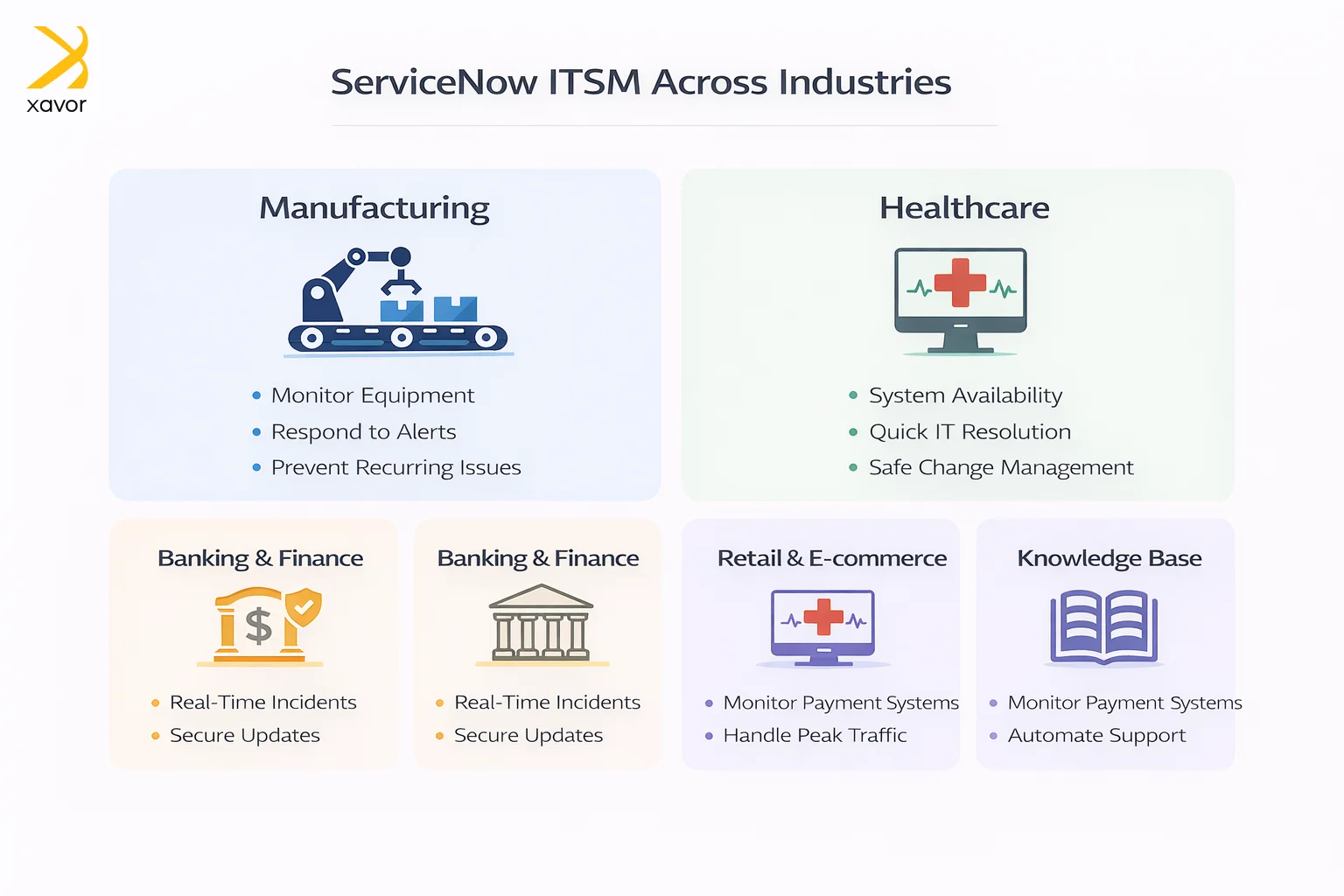
1. Manufacturing
In manufacturing, downtime can stop entire production lines. Even a short delay can lead to missed deadlines and financial losses.
IT solutions for manufacturing industry are:
- Monitoring equipment and IT systems
- Quickly responding to system alerts
- Managing maintenance schedules
- Preventing recurring issues through problem analysis
This ensures that production continues with minimal interruptions.
2. Healthcare
Healthcare systems rely heavily on technology for patient care. Downtime can affect access to patient records, lab results, and medical devices.
ServiceNow ITSM supports healthcare organizations by:
- Ensuring quick resolution of IT issues
- Maintaining system availability
- Managing changes without affecting critical services
- Providing clear communication during incidents
This helps healthcare providers deliver uninterrupted care.
3. Banking and Financial Services
In banking, even a few minutes of downtime can impact thousands of customers.
ServiceNow ITSM helps financial institutions by:
- Managing incidents in real time
- Ensuring secure and controlled system updates
- Reducing the risk of outages during changes
- Providing audit trails for compliance
This improves reliability and builds customer trust.
4. Retail and E-commerce
Retail businesses depend on both physical stores and online platforms. Downtime can lead to lost sales and unhappy customers.
ServiceNow ITSM helps retailers by:
- Monitoring online systems and payment gateways
- Managing peak season traffic
- Resolving issues quickly during high demand
- Automating support processes
This ensures a smooth shopping experience for customers.
5. Benefits beyond downtime reduction
While reducing downtime is a major goal, ServiceNow ITSM also brings several other business benefits, such as:
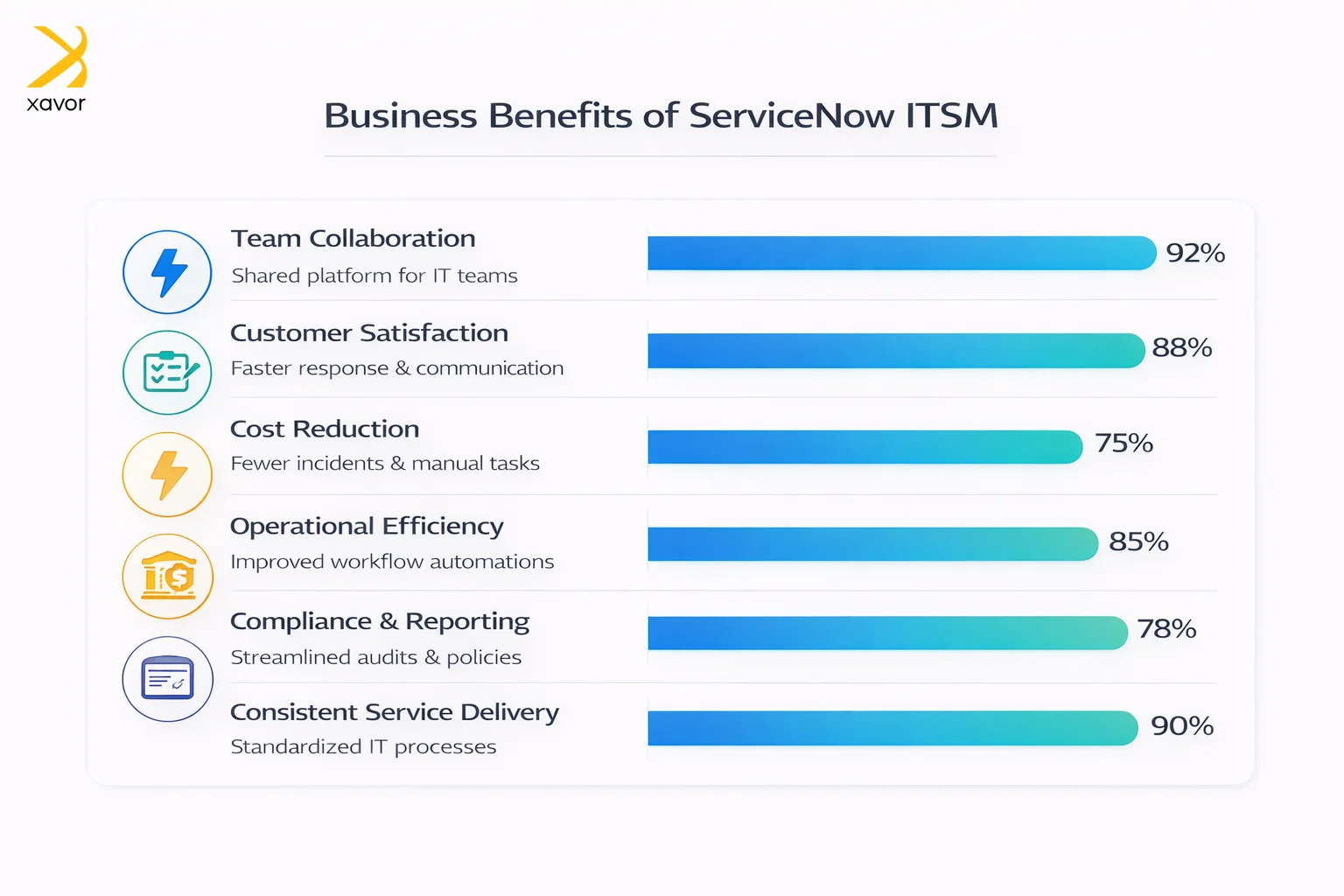
- Improved team collaboration: It gives different IT teams a shared platform to manage issues, share updates, and work together more smoothly.
- Better customer satisfaction: Faster response times and clearer communication help create a better support experience for both employees and customers.
- Reduced operational costs: By automating routine tasks and reducing repeat issues, businesses can save time, lower support costs, and use resources more wisely.
- Increased efficiency: ServiceNow ITSM helps teams follow clear workflows, manage tasks faster, and avoid delays caused by manual processes.
- Stronger compliance and reporting: It centralizes incident, approval, and change records, making it easier to track activities and support reporting needs.
- More consistent service delivery: Standardized processes help ensure issues are handled consistently across teams and locations.
These added benefits make ServiceNow ITSM a valuable IT solution for organizations that want to improve both IT performance and overall business operations.
Best practices for using ServiceNow ITSM
To get the most out of ServiceNow ITSM, organizations should follow some best practices:
- Define clear processes: Set clear workflows for incident, problem, and change management. Avoid unnecessary complexity.
- Train teams properly: Ensure that all users understand how to use the platform effectively.
- Use automation wisely: Start with simple IT process automation and expand gradually.
- Keep the knowledge base updated: Regularly update documentation to reflect new solutions and changes.
- Monitor and improve: Continuously review performance and make improvements based on data.
The role of integration
ServiceNow becomes more effective when it connects with the other tools a business already uses. Since most companies manage IT across different platforms, efficient integration services can help consolidate important information into a single workflow and make coordination easier.
Integration allows:
- Real-time data sharing: Connected tools can pass information directly into ServiceNow, so teams do not have to rely on manual updates or scattered messages.
- Faster incident detection: Alerts from external systems can appear on the platform immediately, helping teams detect service issues earlier.
- Better decision-making: When service data, system alerts, and related records are available together, teams can assess situations with more clarity.
- Improved process flow: Connected platforms help move work from one step to another more smoothly, reducing delays between reporting, review, and action.
This creates a more connected and efficient IT environment, where information moves more smoothly, and teams can manage services with greater accuracy and control.
Final thoughts
When IT support works well, everything feels easier. Teams can focus on their jobs, customers face fewer disruptions, and the business can run with less pressure. That is why companies are paying more attention to how they manage IT solutions for industries and support across the organization.
ServiceNow ITSM gives businesses a better way to stay organized and handle IT work with more clarity. Instead of dealing with scattered processes and constant confusion, teams can work through a system that helps them stay on top of requests, improve service quality, and support the business more effectively.
If your business is looking for a better way to manage IT services, Xavor can help you get there. With the right experience and support, we help organizations use ServiceNow ITSM to achieve their goals and deliver real value. To connect us, reach out to [email protected].

FAQs
ServiceNow ITSM is a platform that helps businesses manage IT services more efficiently. It supports tasks such as incident management, service requests, and change management, helping teams respond faster and reduce service interruptions.
ServiceNow ITSM is useful across many industries, including manufacturing, healthcare, banking, retail, and logistics. Any business that depends on IT systems for daily operations can benefit from better service management and reduced downtime.
Reducing downtime is important because service interruptions can slow work, affect customer experience, and lead to financial losses. With the right IT service management approach, businesses can handle issues faster and keep operations running more smoothly.