

Businesses today are surrounded by more data than ever, but having data is not the same as knowing what to do with it. Teams often spend too much time digging through dashboards, reports, and spreadsheets, only to feel still unsure about the next step. That gap between data and action is exactly why augmented analytics is getting so much attention. It helps businesses make sense of complex data faster and turn it into insights they can actually use.
This shift is becoming increasingly important as AI plays a larger role in decision-making. Gartner said in June 2025 that half of business decisions will be augmented or automated by AI agents in the years ahead, which shows how quickly analytics is evolving. In simple words, businesses no longer want tools that only show what happened. They want systems that help explain, suggest, and guide what to do next. To see why this shift matters, let’s look at how augmented analytics is reshaping BI services and helping businesses get more value from their data.
What is augmented analytics?
Augmented analytics brings together a range of technologies and methods that make data analysis easier, faster, and more useful for people without deep data expertise. By using Artificial Intelligence (AI) and Machine Learning (ML), it automates parts of the analysis process and improves the way users explore and interpret data. It also helps simplify complex information within analytics and business intelligence platforms, making insights easier to understand and act on. This growing use of AI for business intelligence is what’s replacing static dashboards with systems that can explain trends, flag anomalies, and recommend next steps on their own.
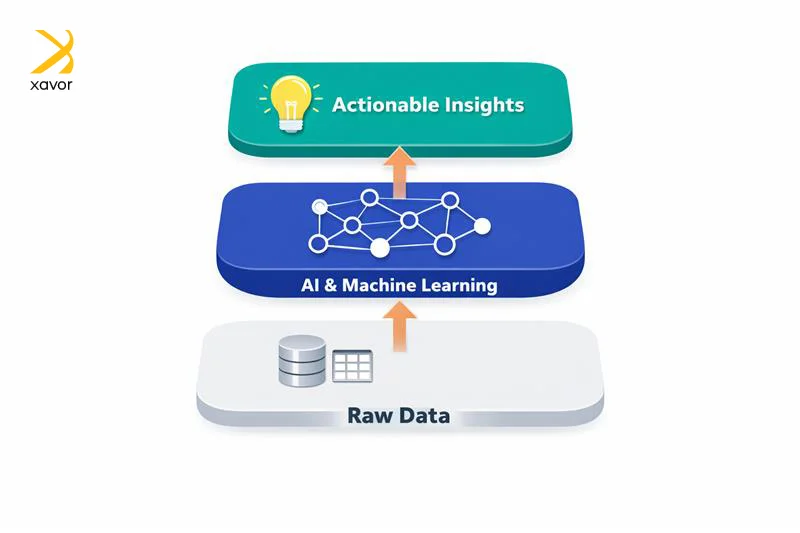
The augmented analytics revolves around automating key parts of the data lifecycle. This includes data preparation, insight discovery, and explanation of results. Instead of manually building reports, users can ask questions in plain language and receive meaningful insights instantly.
One of the good augmented analytics examples is Salesforce Einstein Analytics, which uses machine learning to predict which leads are most likely to become customers. This allows sales teams to focus their efforts on the most promising prospects, leading to smarter, more targeted, and more effective sales strategies.
The shift from traditional BI to augmented analytics
Traditional BI tools mainly help businesses understand what happened by showing historical data through reports and dashboards. Advanced analytics takes this further by helping teams discover patterns, predict outcomes, and understand the reasons behind trends.
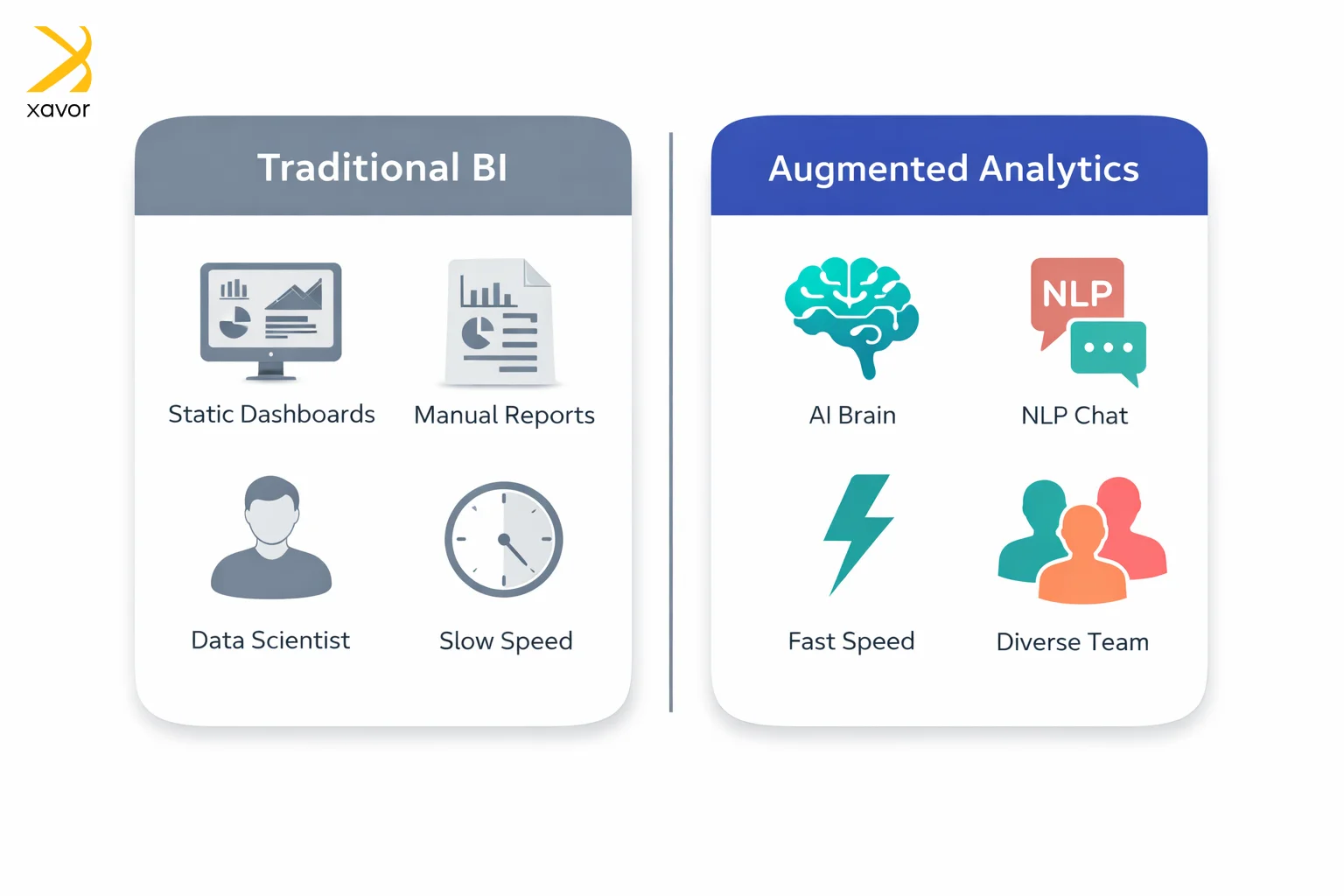
The key difference is that advanced analytics often need skilled analysts or data scientists to run models and interpret results. Augmented analytics makes this process easier by using AI tools, machine learning, and automation to do much of the heavy lifting. This allows business users to explore data, ask questions in simple language, and get insights faster without depending completely on technical teams.
This shift matters because businesses today cannot afford slow decision-making. Leaders need quick, accurate insights and augmented analytics to deliver them faster and more easily.
How augmented analytics technology works
Augmented analytics software works through a few key technologies that make everything possible:
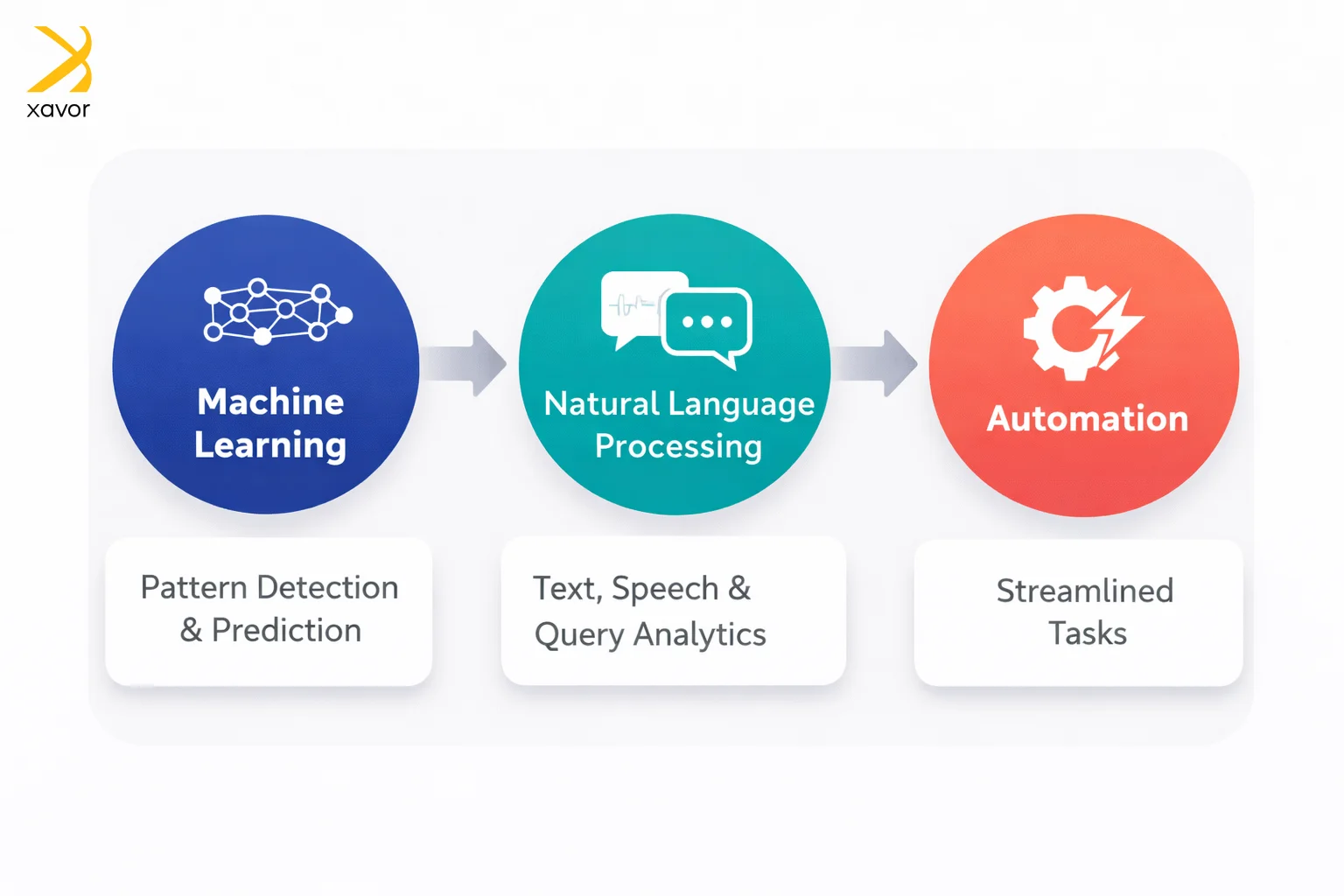
1. Machine Learning
Machine learning models analyze large datasets and detect patterns that humans might miss. These models continuously improve as they process more data.
2. Natural Language Processing
Natural Language Processing allows users to interact with data using everyday language. This makes analytics more accessible to non-technical users.
3. Automation
Automation handles repetitive tasks like data cleaning, data preparation, and report generation. This saves time and reduces errors.
When combined, these elements create a seamless experience where insights are generated automatically and presented in a simple, understandable way.
Market latest trends in augmented analytics
The discussion around augmented analytics has moved past “what is it?” and toward “how quickly can we scale it?” Industry experts and analyst firms now see augmented analytics not as a future-facing concept, but as a core part of the modern data stack.
1. From add-on to core capability
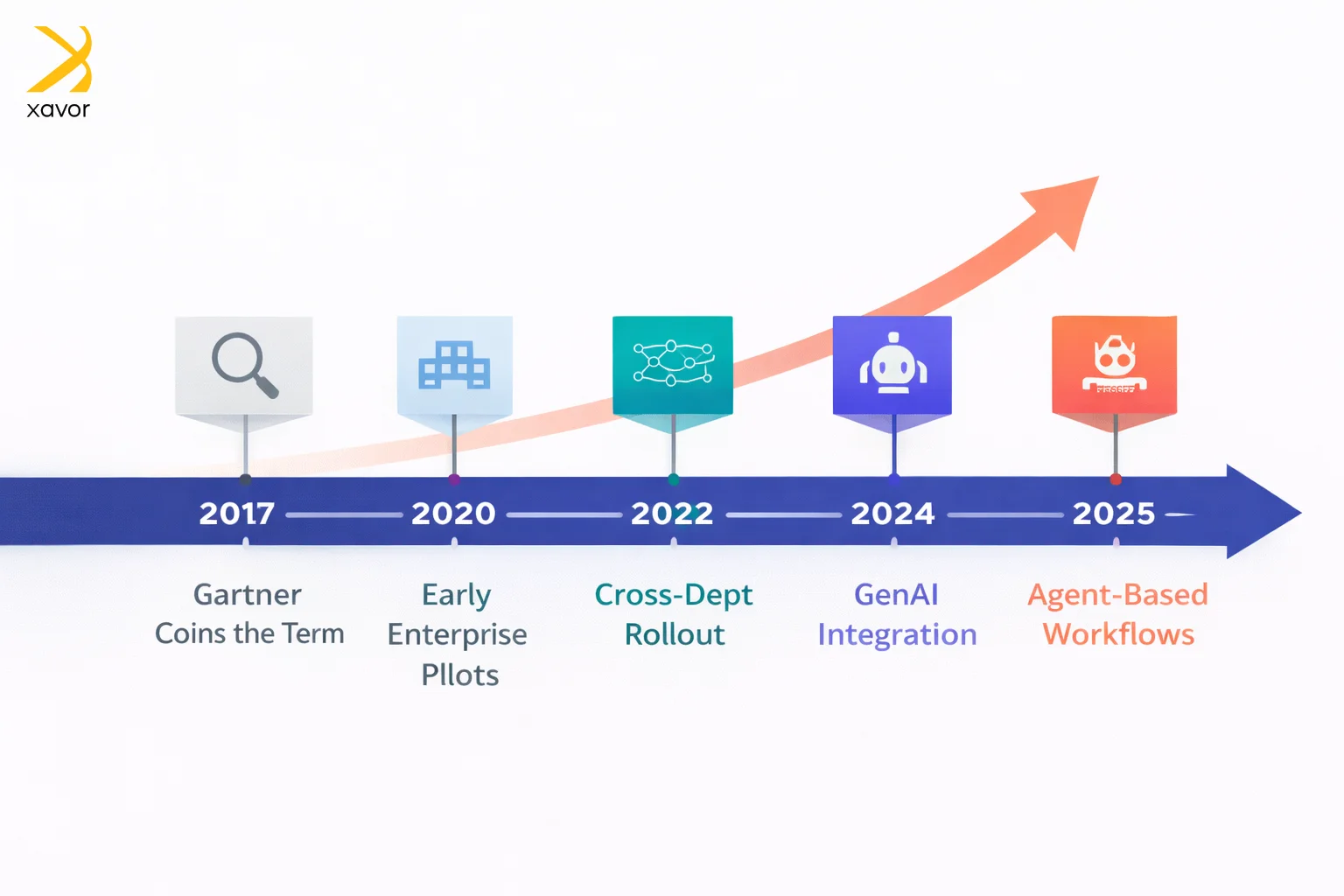
When Gartner introduced the term “augmented analytics” in 2017, it was positioned as an additional layer on top of BI platforms. By 2025, it had become central to enterprise decision-making, influencing how organizations build analytics strategies, organize teams, and choose technology partners.
2. Faster enterprise-wide adoption
Research shows that the use of augmented analytics capabilities has more than doubled over the last three years. Companies are no longer testing it in just one department. They are rolling it out across sales, marketing, finance, operations, and IT. Adoption is moving especially fast in data-heavy sectors such as pharma, financial services, and consumer goods, where leaders need to manage complexity without slowing decisions down.
3. GenAI and agent-based workflows are changing the game
Generative AI has taken augmented analytics into a new stage. Instead of simply highlighting patterns, newer platforms can use AI agents to handle multi-step analysis, surface problems, test possible explanations, and suggest actions with far less manual effort. This shift is changing what businesses expect from analytics platforms.
4. More attention on trust and governance
As augmented analytics becomes more powerful, companies are paying closer attention to control and accountability. Businesses now want explainable AI, bias monitoring, and strong governance frameworks so they can rely on the insights being generated. Compliance and risk concerns have turned governance into a major factor in platform selection.
5. Broader adoption across industries and functions
What started in data-focused areas like marketing analytics is now expanding across the enterprise. Examples include:
- Pharmaceutical companies are using augmented analytics to identify where patients drop off in the care journey
- CPG companies are improving trade spend decisions and refining SKU portfolios
- Banks are using it to detect fraud signals and predict customer churn
- IT teams are applying it to spot anomalies earlier and minimize downtime
Benefits of augmented analytics
The benefits of augmented analytics are driving rapid adoption across industries. Here are some of the most important advantages:
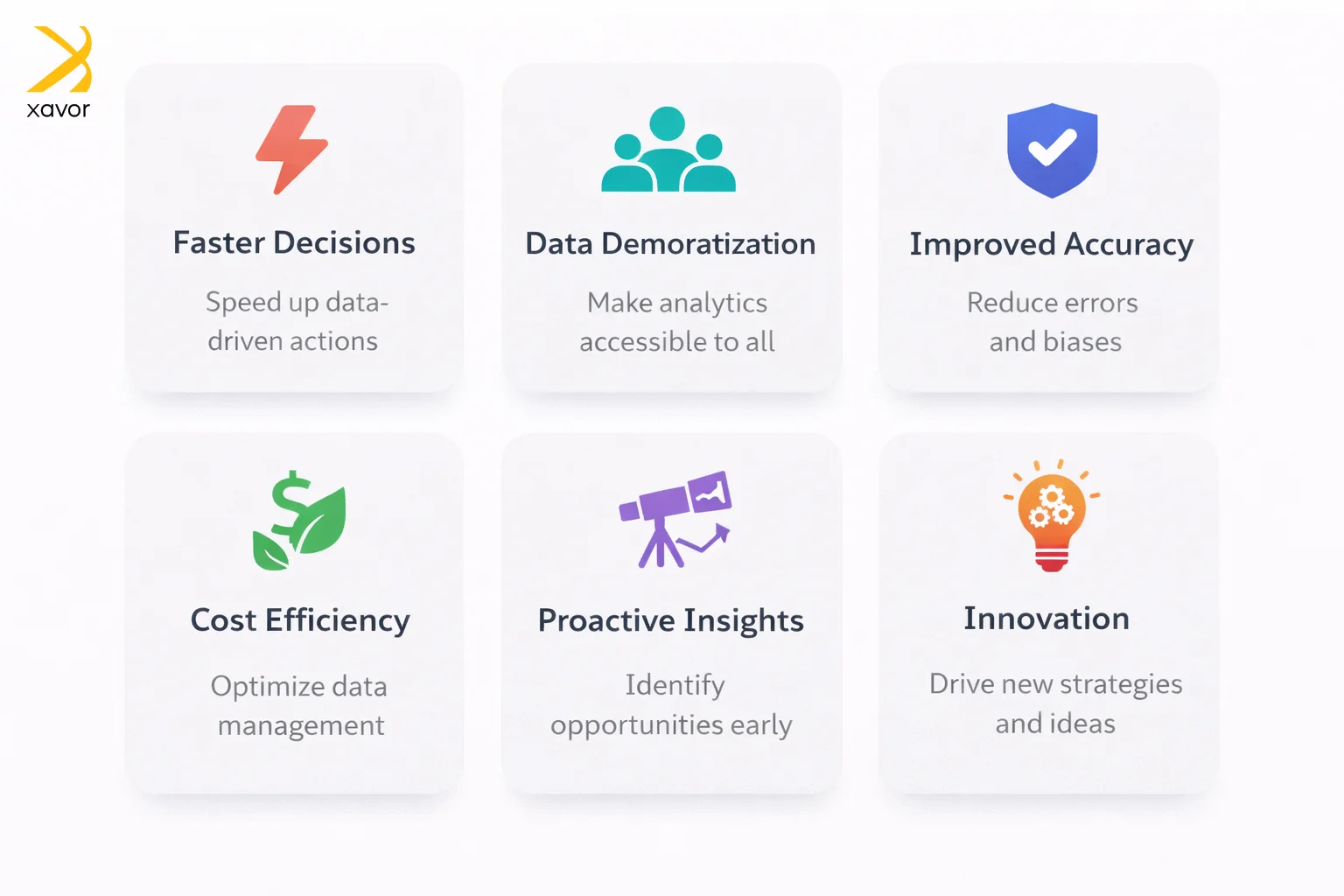
- Faster decision-making: With automated insights, businesses can act quickly without waiting for manual reports.
- Democratization of data: Employees across departments can access and understand data without needing specialized skills.
- Improved accuracy: AI reduces human errors in data analysis and ensures more reliable results.
- Cost efficiency: Organizations can reduce reliance on large data teams, lowering operational costs.
- Proactive insights: Instead of reacting to past data, businesses can predict future trends and take preventive action.
These augmented analytics benefits are particularly valuable in competitive markets where speed and accuracy are critical.
Challenges of augmented analytics
1. Data quality and governance
Augmented analytics is only as good as the data behind it. If the data is incomplete, outdated, or inconsistent, the insights can be misleading.
That is why strong data governance matters. Businesses need clear processes to fix data silos, improve accuracy, and maintain quality. Even with automation, human review is still important.
2. Ethical concerns
Augmented analytics uses AI to uncover patterns and make recommendations. But AI systems can reflect bias if the data or models are flawed.
There is also the issue of transparency. Businesses need to understand how insights are generated, so decisions remain fair, explainable, and responsible.
3. Organizational and cultural barriers
Technology is only one part of the challenge. Many teams are still hesitant to adopt new analytics tools or feel unconfident using data on their own.
To make adoption easier, companies need training, support, and a culture that encourages data-driven thinking. Without that, even the best tools can go underused.
Conclusion
Augmented analytics is making business intelligence feel less complicated and more useful. It helps teams get clear answers from data without going through a long, technical process. That means people can spend less time trying to understand numbers and more time making decisions that actually move the business forward.
That is what makes it so important right now. Businesses need to react quickly, work smarter, and make sense of growing amounts of data. Augmented analytics helps make that possible by turning data into something teams can actually use in their day-to-day work.
If you want to explore how this can work for your business, Xavor can help. Reach us at [email protected].

FAQs
Augmented analytics is the use of AI, machine learning, and natural language processing to automate data preparation, analysis, and insight generation, making business intelligence easier for non-technical users to work with. That matches how major BI vendors and explainer pages currently define it.
The main benefits of augmented analytics include faster decision-making, easier access to insights across teams, reduced manual reporting effort, improved accuracy, and more proactive forecasting. These themes align with both your draft and current vendor explainers on the topic.
Traditional BI mainly helps teams report on past performance through dashboards and reports, while augmented analytics adds AI-driven guidance, automated insight discovery, and natural-language interaction so users can explore data and act faster. That distinction is central to your blog and is echoed in current platform explanations.