
Mobile applications serve three key purposes for any business: widen reach, drive customer engagement, and both of these are done to achieve the ultimate goal of increasing business revenue. They are a great way to sell your products and services to customers in an engaging way.
But there are so many ways to monetize an app. Your choice of mobile app monetization strategies would greatly affect how much money you can make out of it. Your mobile app can see success, become a favorite of users with its great user experience and bug-free functionality. However, it can still generate very little revenue if your mobile app monetization strategy doesn’t really work.
That is why knowing how to monetize an app is equally important as knowing how to build and market it. Therefore, in this article, we will tell you the 10 best mobile app monetization strategies that you can use to make some money out of your hard work.
It will break down the different mobile app monetization models to see how they work. And finally, we will discuss some best practices for app monetization in 2025.
What is app monetization?
Mobile app monetization is done to generate revenue from a mobile app. Earlier mobile apps on Nokia or BlackBerry were usually sold as one-time purchases with no easy global distributions.
But with the introduction of Apple App Store and Google Play, developers started to come up with smart ways to monetize an app. This allowed owners to generate a continuous revenue stream from their apps.
Gradually with time, mobile app monetization platforms also started to emerge, which provided ready-made mobile app monetization tools and services to developers. We will discuss these app monetization solutions later in the article but first let’s take a look at the top app monetization in 2025.
Top app monetization strategies to look out for
In a paradoxical way, monetizing mobile apps in 2025 is so much easier and difficult at the same time. While you have so many mobile app monetization options at your disposal, choosing a mobile app monetization strategy can be really confusing for developers and business executives.
Following these 10 strategies will help you in making money from mobile apps with a lot more confidence.
1. Freemium Model
The freemium model continues to dominate mobile app monetization. The app is free to download and use in this approach, but certain features, content, or services are locked behind a paywall.
What Works:
- Offer core functionality for free while showcasing the value of premium features.
- Examples: Spotify, which provides free streaming but charges for ad-free listening and offline downloads.
2025 Insights:
- Focus on AI-driven apps and personalized experiences in the premium tier.
- Bundle premium features with subscription services for added value.
Freemium apps succeed when they balance accessibility with enticing upgrades. Highlighting user benefits through well-crafted free experiences remains crucial.
2. Subscription-Based Model
Subscriptions have significantly increased as users prefer predictable, recurring payments for apps they use regularly.
What Works:
- Offer tiered pricing to cater to different user needs.
- Examples: Netflix, which provides content streaming based on subscription levels.
2025 Insights:
- Leverage hybrid subscriptions (e.g., combining fitness apps with wearables).
- Use free trials effectively to convert users into subscribers.
Innovation is driving the subscription model’s growth. Apps offering more value through personalization or bundled services will likely have higher retention rates.
3. In-App Advertising
Advertising remains a staple, especially for free-to-download apps. The challenge lies in balancing ad placements without alienating users.
What Works:
- Use non-intrusive ad formats like native ads and rewarded video ads.
- Examples: Mobile games offering extra lives or bonuses for watching ads.
2025 Insights:
- AI-driven ad personalization can significantly improve user engagement.
- Implement ad frequency caps to avoid overwhelming users.
Modern in-app advertising leverages data-driven insights to align ads with user interests, ensuring better engagement and revenue without disrupting user experiences.
4. In-App Purchases (IAP)
In-app purchases enable users to buy digital or physical items directly within the app, making this a lucrative option for apps in gaming, e-commerce, and content delivery.
What Works:
- Offer a mix of consumable (e.g., game currency) and non-consumable items (e.g., permanent upgrades).
- Examples: Clash of Clans, which generates revenue through in-game items.
2025 Insights:
- Integrate augmented reality (AR) for virtual goods in apps.
- Create time-sensitive offers to boost engagement.
Gamification paired with exclusive in-app purchases keeps users invested in their experience, driving sustained revenue growth.
5. Paid Apps
Although less popular, paid apps can still work if they provide unique value or cater to a niche market.
What Works:
- Justify the price with exclusive features or premium content.
- Examples: Procreate, which charges a one-time fee for advanced digital art tools.
2025 Insights:
- Combine the paid model with optional IAPs for added revenue streams.
While challenging to scale, paid apps thrive when they serve targeted audiences or deliver unmatched quality.
6. Sponsorship and Partnerships
Sponsorship involves collaborating with brands to integrate their content or services within your app. This works well for apps with a strong niche audience.
What Works:
- Feature branded content or co-create campaigns with partners.
- Examples: Fitness apps collaborating with health supplement brands.
2025 Insights:
- Use influencer marketing within apps to increase sponsorship value.
- Provide sponsors with detailed user analytics for better ROI.
Sponsorships allow for a steady income stream while aligning your app with complementary brands that enhance user trust and engagement.
7. Crowdfunding
Crowdfunding is an alternative route for unique or community-driven apps. Platforms like Kickstarter and Patreon help developers secure funding directly from users.
What Works:
- Build a loyal community by offering early access or exclusive perks.
- Examples: Indie apps focused on education or creativity.
2025 Insights:
- Use social media to engage directly with potential backers.
- Leverage subscription crowdfunding for ongoing development support.
Community-driven cross platform development often uses crowdfunding to maintain development transparency and foster user loyalty.
8. Data Monetization
Data monetization involves leveraging anonymized user data for analytics or market research.
What Works:
- Ensure transparency and comply with data privacy regulations (e.g., GDPR, CCPA).
- Examples: Apps offering insights based on aggregated user behaviour.
2025 Insights:
- Offer users the option to opt-in for data sharing in exchange for premium features.
Ethical data mobile app monetization strategies must prioritize user consent and clear communication with privacy concerns growing.
9. Blockchain-Based Monetization
Blockchain is reshaping how apps handle transactions, ownership, and rewards.
What Works:
- Use cryptocurrencies or NFTs for transactions within the app.
- Examples: Gaming apps offering unique NFTs as rewards.
2025 Insights:
- Explore decentralized finance (DeFi) features for user rewards.
- Ensure a seamless user experience for blockchain-based transactions.
The blockchain offers an innovative approach to mobile app monetization by empowering users with ownership and transparency.
10. Hybrid Monetization
Hybrid monetization is among the emerging monetization strategies in the latest mobile app trends. It combines different app monetization strategies to have more than one way for making money from mobile apps.
What Works:
- It gives options: users who want to pay can upgrade or buy items, while those who don’t pay still contribute by engaging with ads.
- This helps maximize lifetime value (LTV), which is the total revenue you make from each user over time.
- Examples: Premium users might spend money on in-app purchases, while free users watch ads which still brings in revenue
2025 Insights:
- Some apps like Netflix now offer cheaper subscription tiers with ads, letting users choose price vs. experience.
- Overloading users with ads still cause churn, so the balance matters more than ever.
Hybrid monetization works best when you segment users by behavior, such as playtime, spending habits, or engagement. Then target your ads, offers, or premium features to each group instead of using a one-size-fits-all approach.
Best mobile app monetization platforms in 2025
Traditionally, to monetize an app, developers have to build their own payment systems, ad networks, or subscription tools. That is really not the best way to monetize apps as it requires building everything from scratch.
On the other hand, a mobile app monetization platform offers app monetization solutions to plug in proven monetization models. These platforms have their own ad networks and help developers in marketing, monetizing, and analyzing their apps.
These are the top mobile app monetization platforms in 2025 that you can use to make money.
- Google AdMob
- AppLovin MAX
- Facebook Audience Network
- IronSource
- Unity Ads
Emerging Technologies in App Monetization
2025 is witnessing the rise of new technologies influencing monetization strategies.
- AI and Machine Learning: Personalization driven by AI helps target users with tailored offers, ads, and in-app experiences, maximizing conversions.
- AR and VR: Immersive technologies are opening new gaming, retail, and education revenue streams.
- Voice Commerce: With smart devices becoming more prevalent, voice-enabled apps explore voice commerce as a monetization tool.
Case Studies and Real-World Examples
To better understand how mobile app monetization strategies work in practice, let’s explore a few real-world success stories:
- Duolingo: This language-learning app leverages the freemium model with ads for free users and subscription plans for those who want an ad-free experience with additional perks like offline access.
- Fortnite: Known for its in-app purchases, Fortnite offers cosmetic items and battle passes that keep users engaged without making the gameplay pay-to-win.
- Headspace: A subscription-based meditation app that uses free trials and personalized recommendations to convert users into paying subscribers.
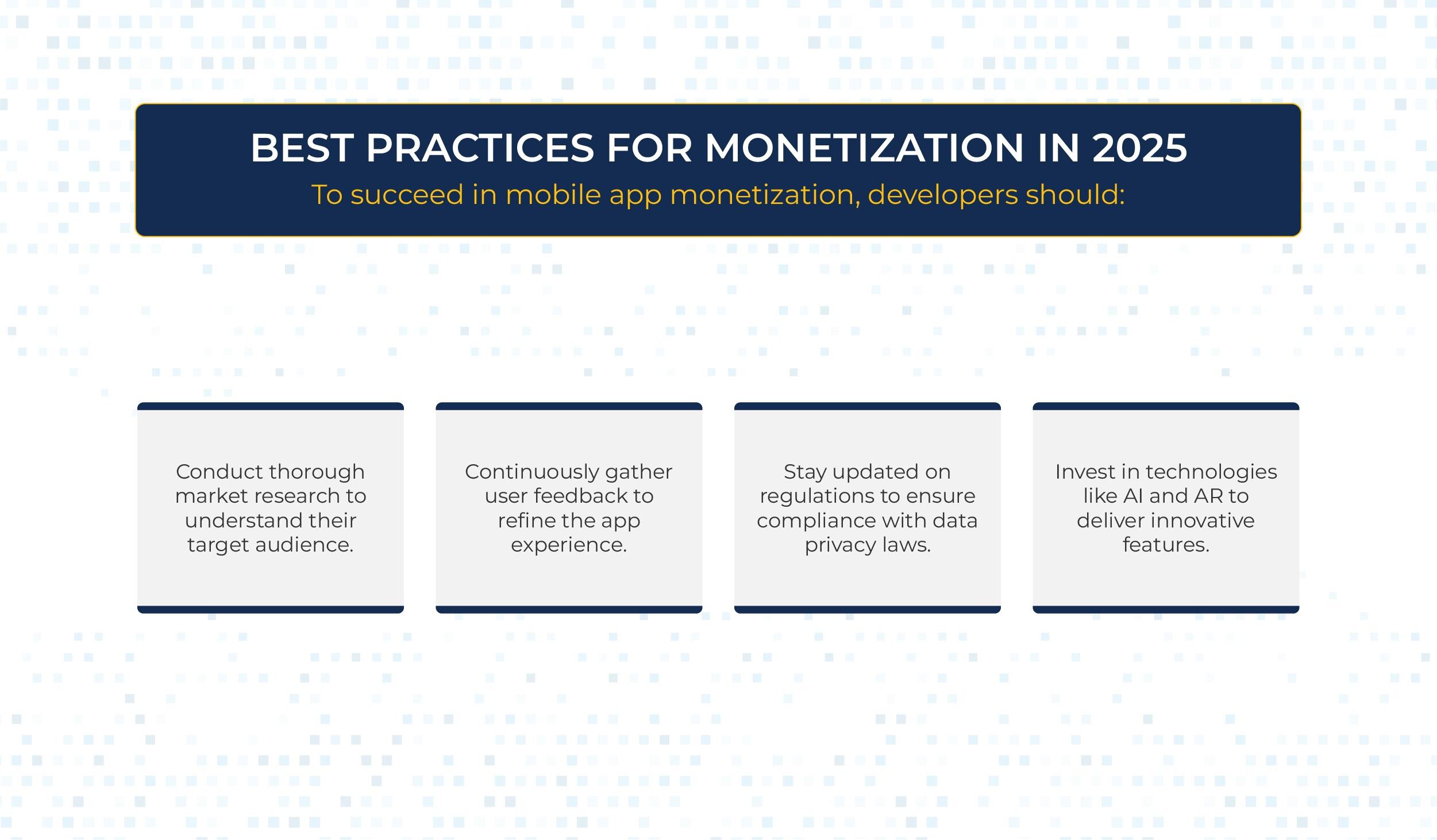
Best Practices for Monetization in 2025
You can combine these app monetization tips and best practices with a well-chosen monetization strategy, so your app can achieve sustainable growth while maintaining high user satisfaction.
Final Thoughts
Choosing the right monetization strategy depends on your app’s audience, industry, and core value proposition. In 2024, the emphasis is on user-centric approaches that balance revenue generation with excellent user experiences.
Whether you opt for subscriptions, ads, or cutting-edge blockchain solutions, staying adaptive and innovative will be the key to success in the ever-evolving mobile app ecosystem.
Mobile app monetization is no longer a one-size-fits-all approach. It demands a deep understanding of market trends, user preferences, and technological advancements.
Developers for cross platform mobile development and businesses that prioritize user satisfaction while exploring diverse revenue models will remain at the forefront of this dynamic industry.
If you need further help in cross platform mobile development and mobile app monetization, you can contact us at [email protected]. We will schedule a free consultation session to explore how Xavor can assist you in this matter.